
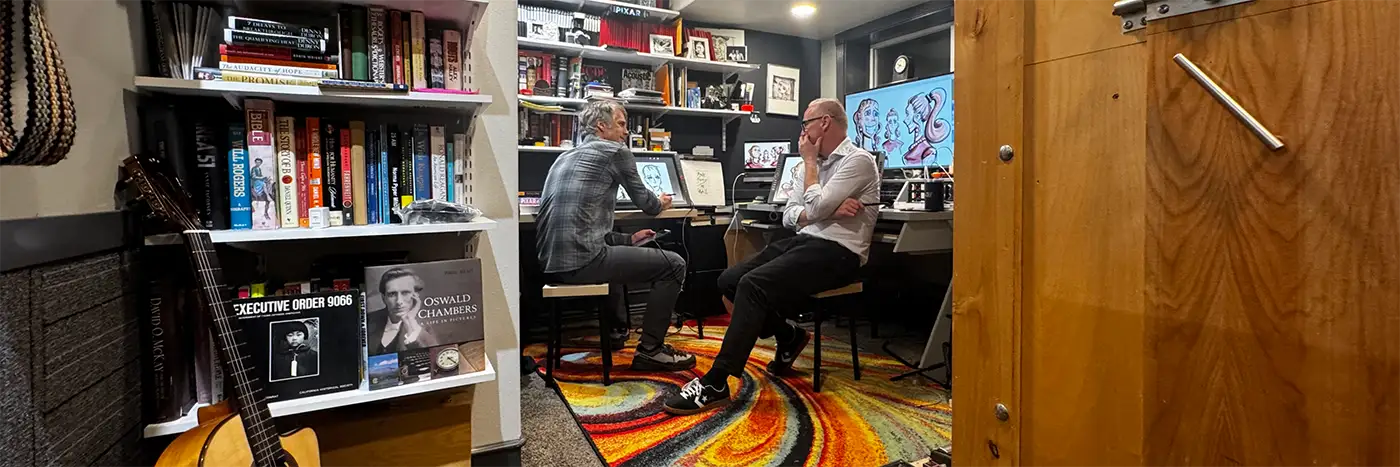
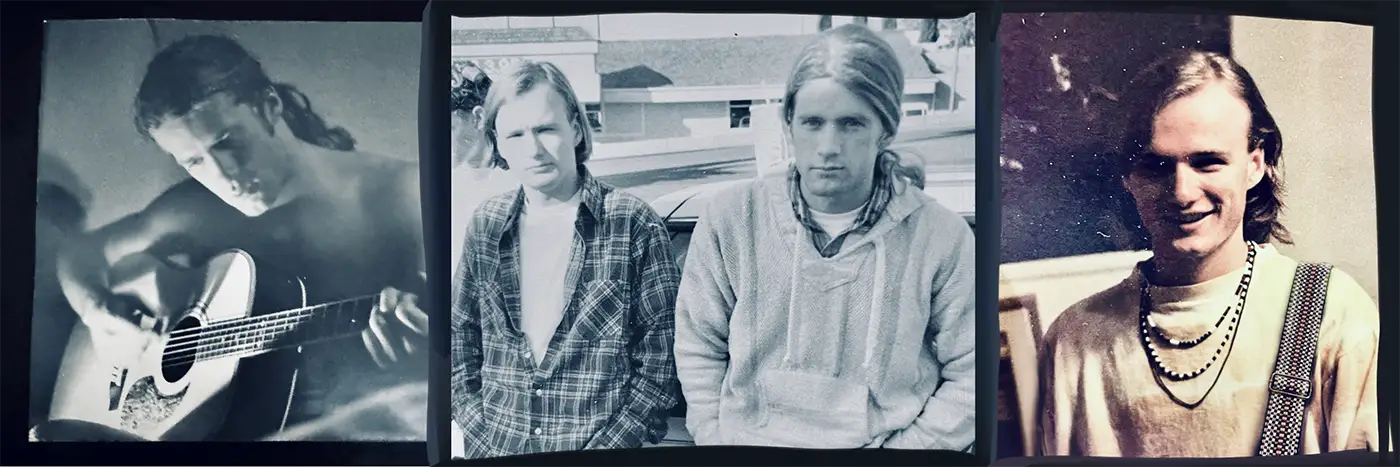
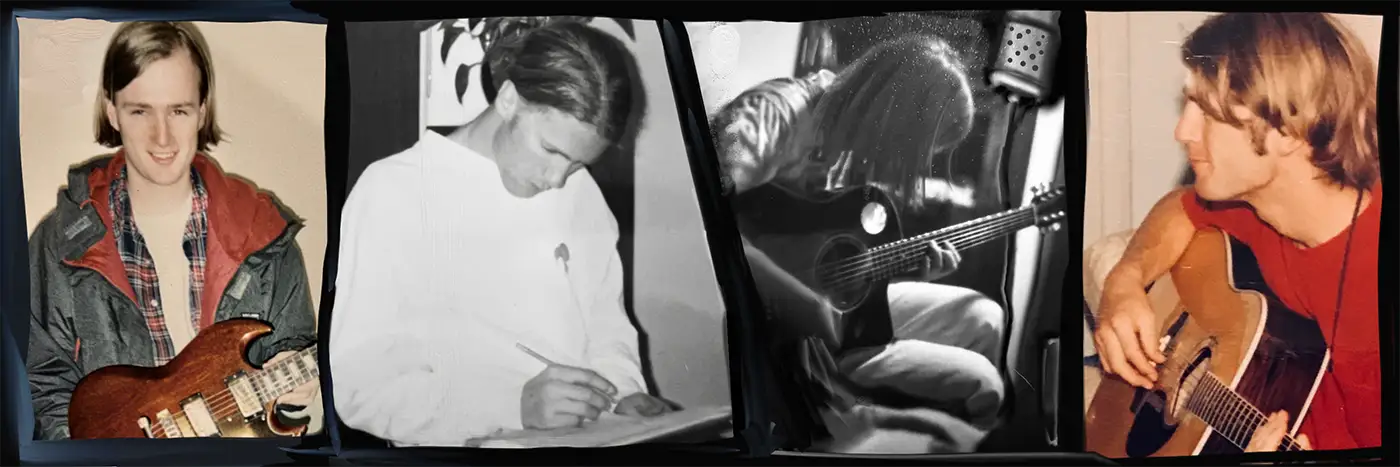
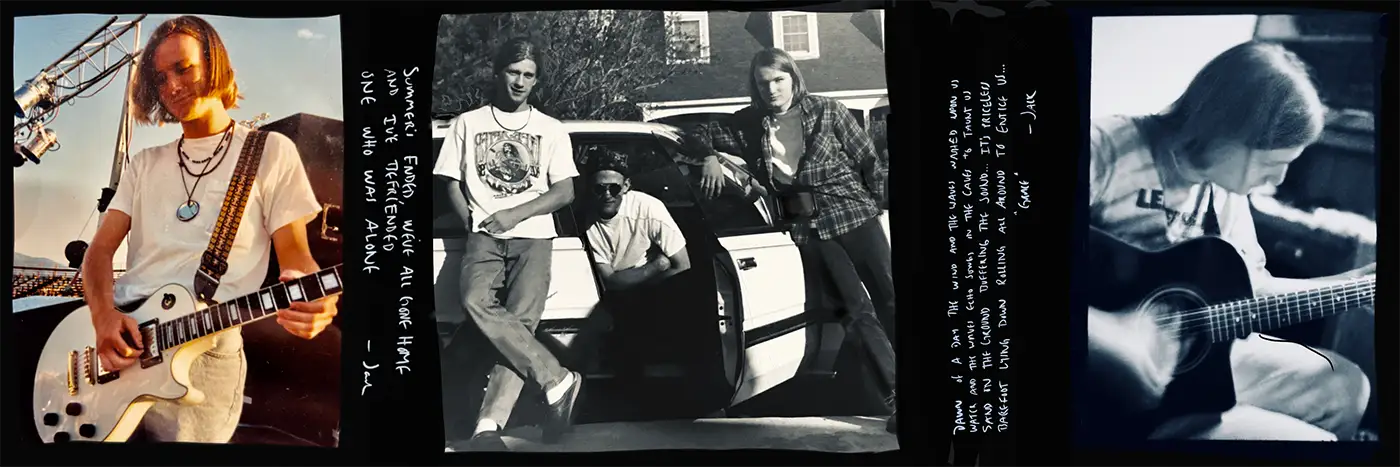
That’s a line from a song Bryan and I (Jack) wrote together more than 35 years ago. We met working in the kitchen at our local Ski Resort. I was singing along with Zeppelin, Floyd or the like on the radio one night and Bryan looked at me and said, “dude, you gotta come sing in our band!” I think the following night we met up and wrote our first song together.
Niether of us had any idea of just how fateful that first night would become.
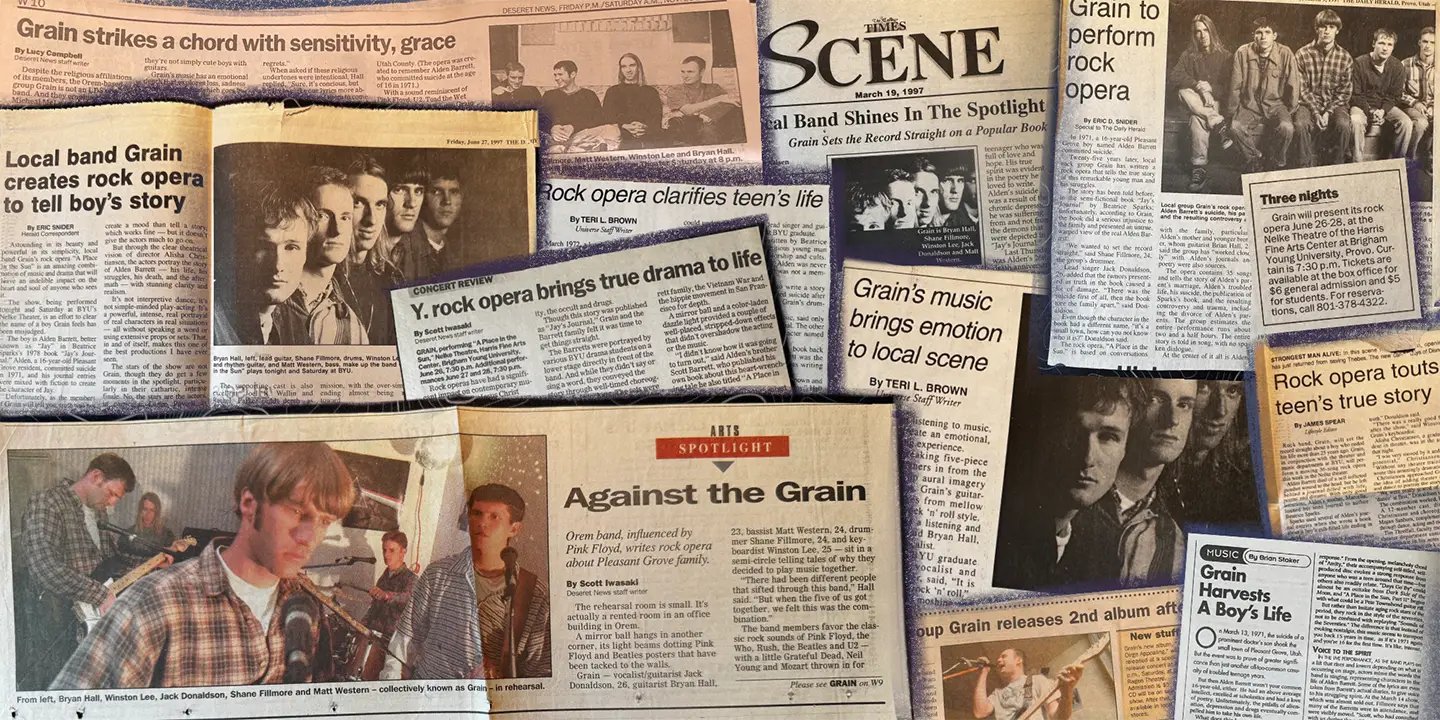
Fast forward a few years and we found ourselves in front of packed auditoriums performing the first version of Pleasant Grove Rock Opera (“A Place in the Sun” at the time - both the band and opera have now changed names for legal reasons). It was magical, and the show had many elements of great storytelling (especially by typical Rock Opera standards), and word was spreading(!)...but, we were young and didn’t know what we had or what to do with it.

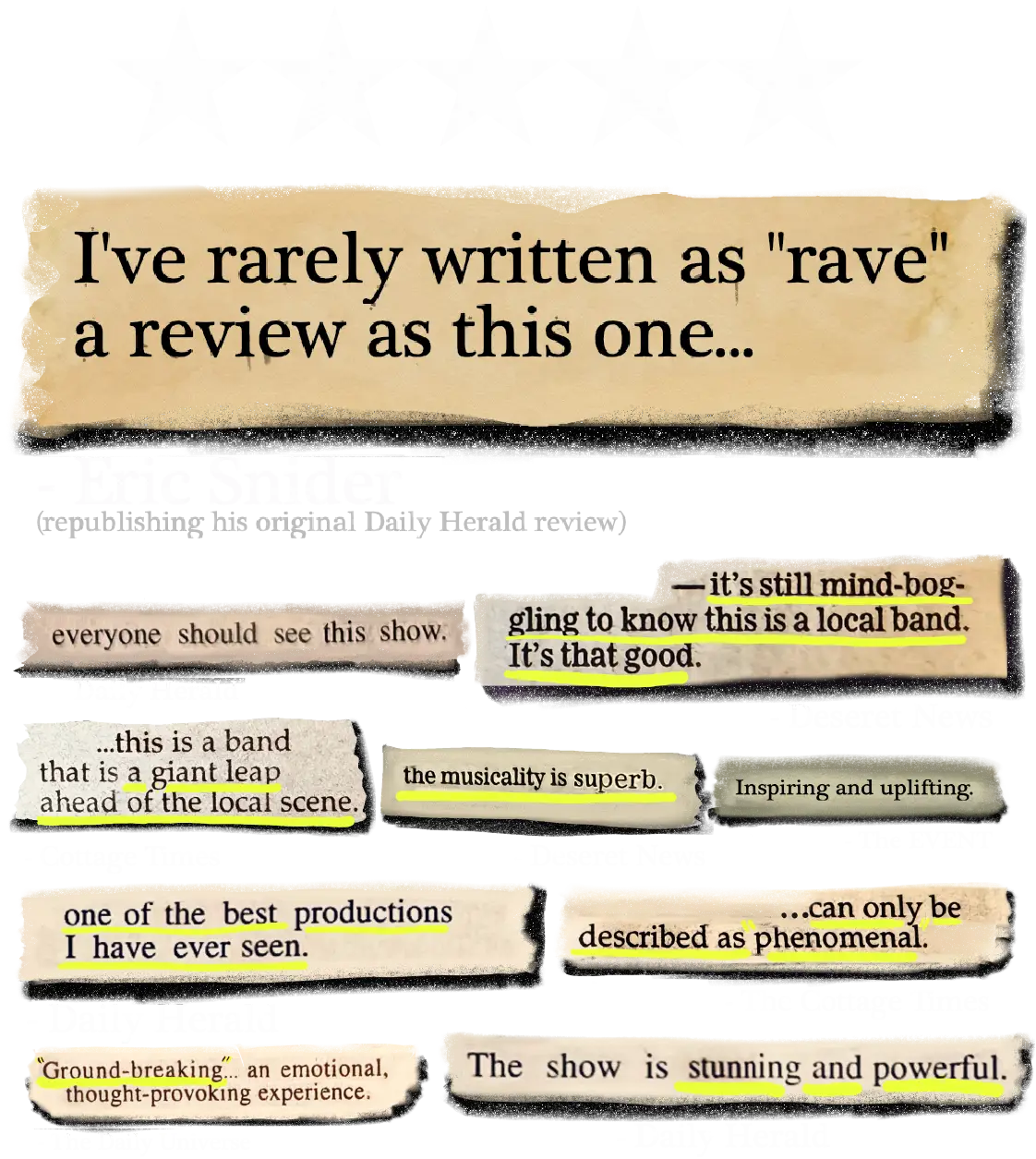
It was truly an incredible season in our lives.
And very abruptly at that. In what seems like a matter of months, I had to go to graduate school in Wisconsin, Bryan moved to San Francisco for work, Shane and Matt (the original drummer and bass player) moved to NYC, and only Winston, our beloved keyboardist remained. These were the obvious choices for all of us at the time.
But it left a huge hole in my heart.
For the next 4-5 years Bryan and I would connect again on trips home for the holidays or summer breaks...and every time, we'd grab guitars and create, create, create. It's hard to express what I'm trying to explain here. I loved getting my PhD and raising kids in Madison. And I'm sure Bryan loved doing design work in the Bay Area. But every time we'd get together it was like “how are we not supposed to be doing this?”
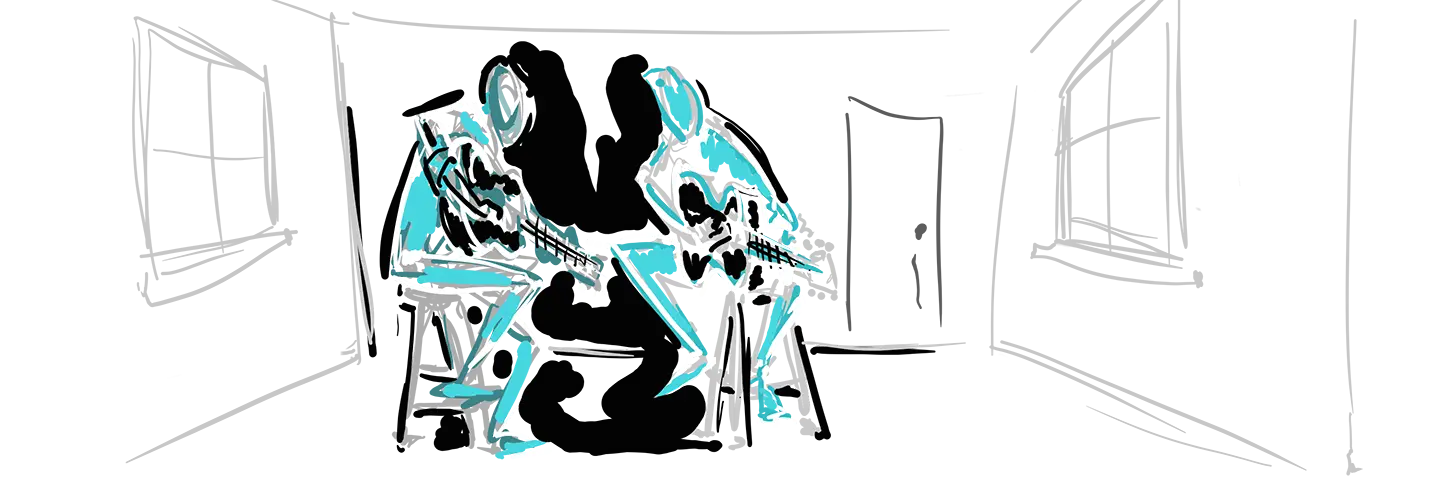
In 2005 Bryan told me he was moving back home and starting a documentary film company. He asked me if I’d join him. “Of course not.” I had just finished my PhD and was working as a Post Doc. I had a research grant to do work in Iceland, then I’d be off to teach at University. I couldn't even consider walking away from all of that. And yet, there was always a tug to exercise my creative side, and somehow I’d keep finding time to go on crazy adventures with Bryan and the crew around the globe filming things and helping craft stories and films for various non-profits. It was just, I don’t know, “easy” to do this kind of stuff together…
And if filled my soul.

In the spring of 2007 I made a trip home for an interview for a professorship at our local University. After the 2-day interview, I spent an extra day at Bryan’s film studio. The crew was neck deep in a massive undertaking for a demanding client. We reviewed all the work at hand and some large projects on the horizon. I felt strangely comfortably speaking to the crew like they were my own and offered up my suggestions for additions and improvements. And, again, Bryan said, “Dude, come join me. We could do this so much better as a team.” It was like he was asking me to join the band again! (insert rock metal “corna” hand salute here!)
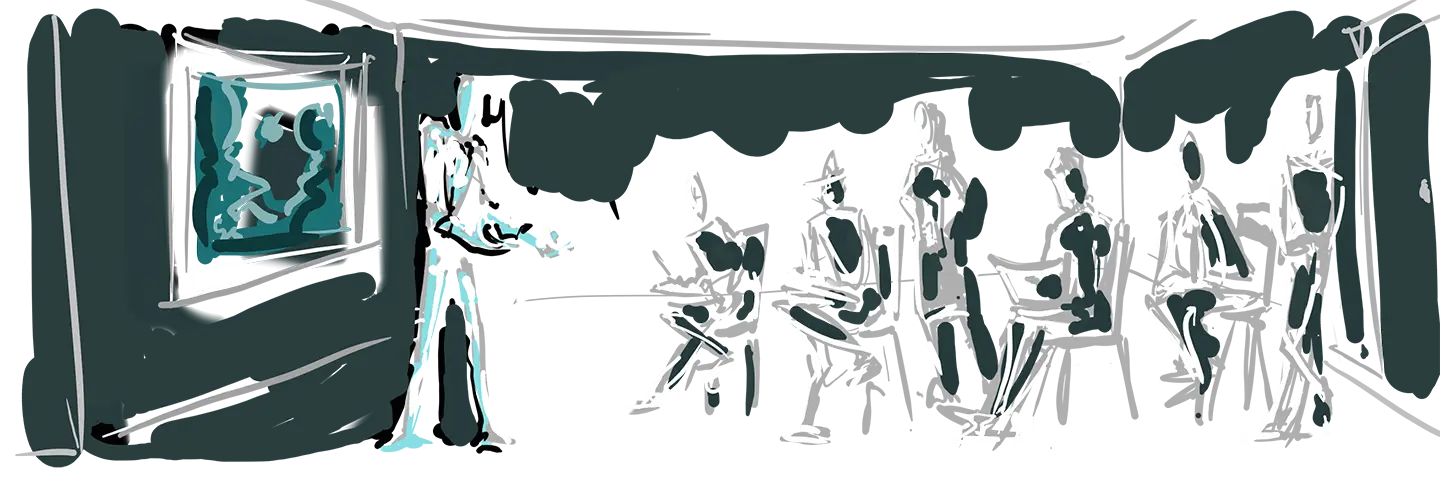
Of course I said “no” for the tenth time. I’d loved spending the day with them and, yes, it was energizing. But, ahem, I just had a grueling interview for what could be my forever job, and had two others scheduled and applications in at Universities around the country. As I drove back to my mother’s home from the studio I began thinking of my wife and three young kids in Madison, and this life I’d been working for. I was thankful and excited about that new life, honestly, and so “no” was clearly the right answer for Bryan, right?
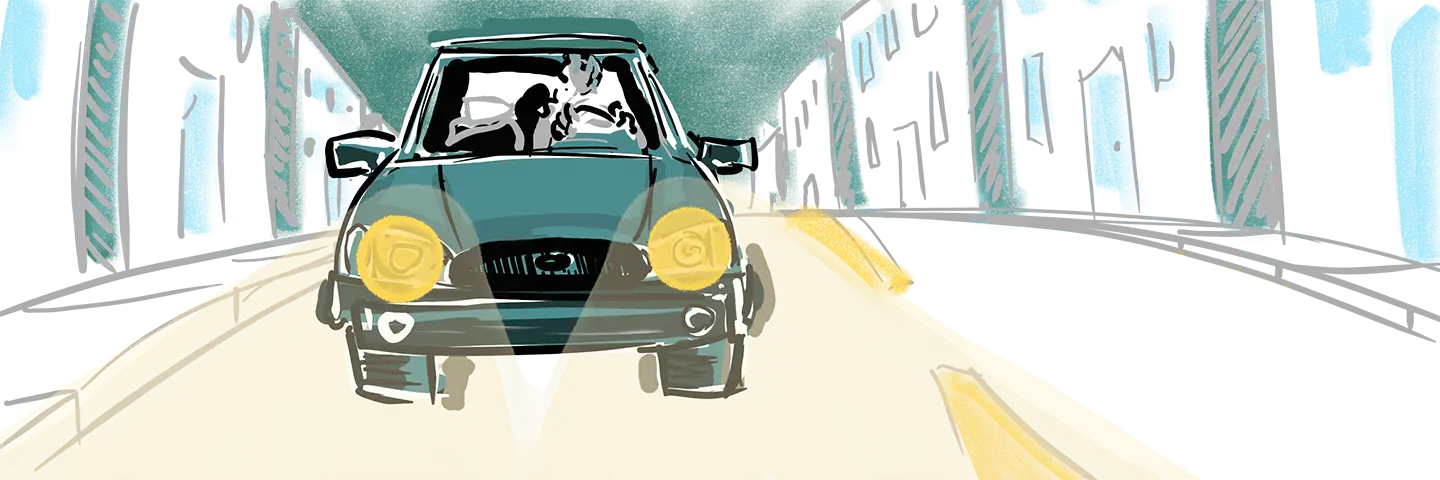
On my drive back to where I was staying that evening, something hit me like a bolt of lighting. So much so that I was compelled to pull my car over and be still for a time. There on that day, on that roadside, frozen to that steering wheel, I just knew that I needed to bring my family back home and raise our kids here.

It was one of the hardest decisions I’ve ever had to make. And it would be way harder still to get my wife on board!
But somehow I knew. And so I convinced her.
It would be another decade before I’d understand how pivotal that one choice would be.

For the next 13 years our documentary studio evolved into a company that could also do animations, marketing, branding, design, PR, and even into a software company (long story!), depending on our clients’ needs. Thankfully, a great many of the projects we worked on were for genuinely amazing clients that were focused on changing the world in one way or another: Orphanages all over the globe, adoption agencies, addiction recovery centers, food banks, prison rehabilitation houses, and good political causes on both sides of the isle. It was rewarding, and, we were good it.
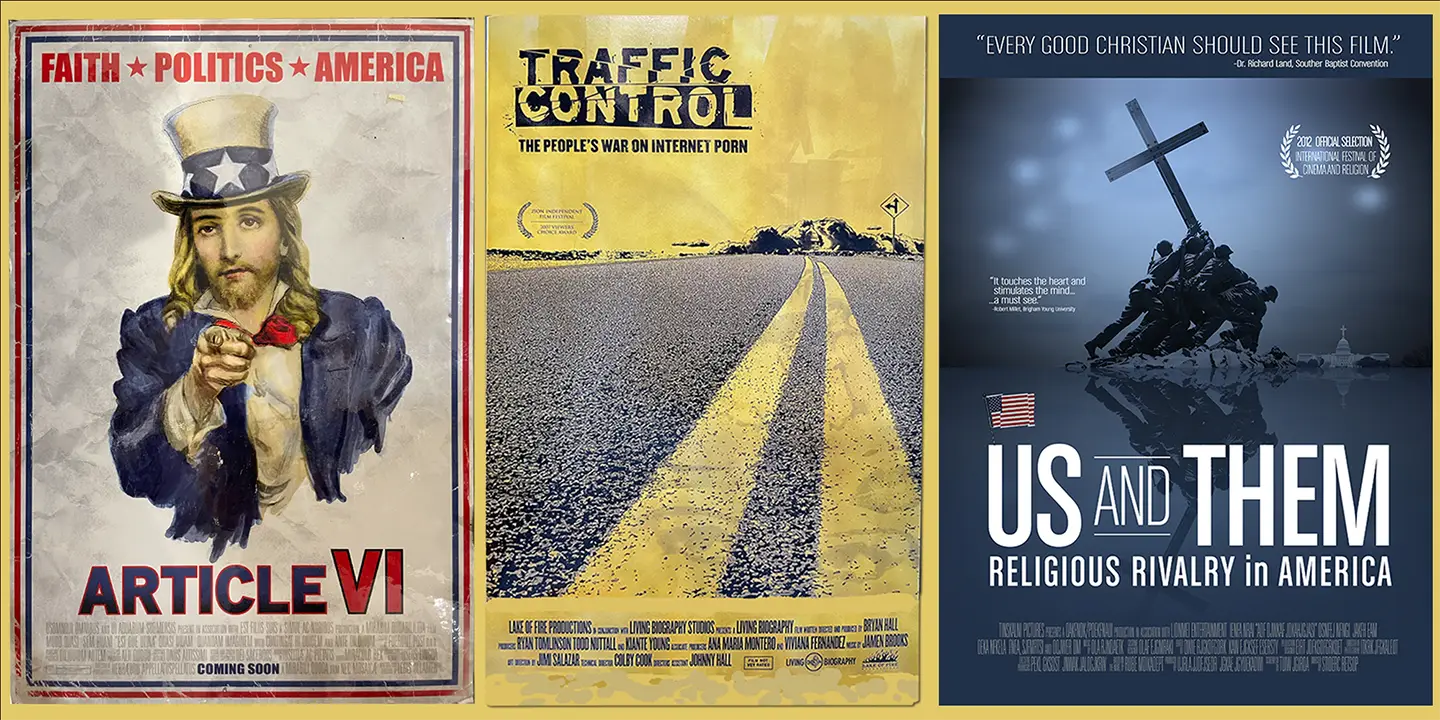
The work required to create a feature length documentary worthy of broadcast level distribution is a little like getting a Ph.D (I should know!). You spend months, if not years, becoming an “expert” in a subject and then present it in a way that’s got to be not only credible, but also compelling and entertaining.
In short, you have to become a master at telling stories.
Yes, the details matter, but it’s the stories that sell.
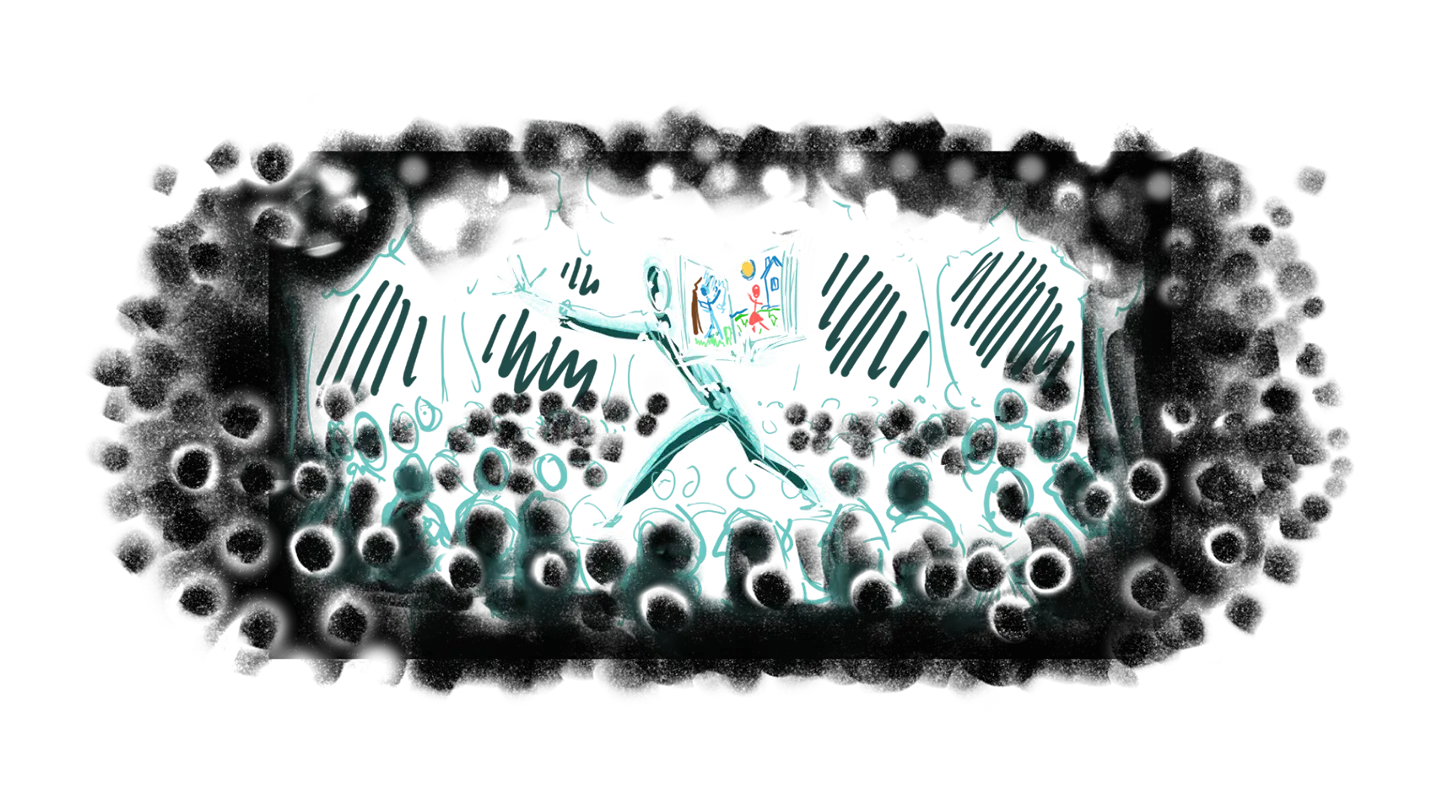
As Bryan and I honed this craft over the years we began to marvel time and time again at just how good the opera we’d written in our early 20’s actually was. It seemed to hold up to nearly every standard required to make a story great. In many cases we’d say to ourselves “How in the world did we know how to do all this back then?”
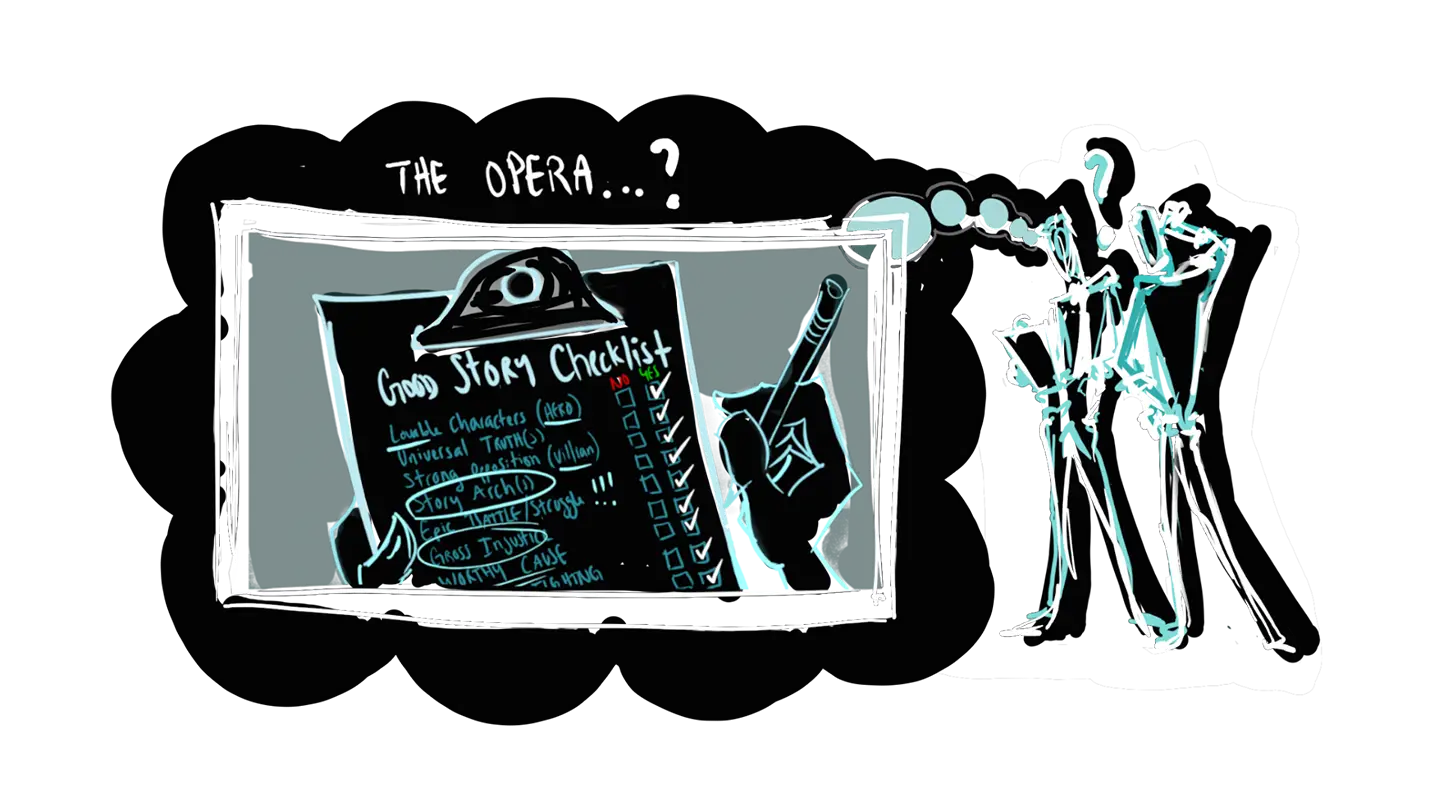
Satisfying because the packed theaters and rave reviews made a lot more sense in hindsight (it wasn’t a fluke!). But frustrating because, try as we might, in the 20 years that followed, we genuinely never understood how or what else could be done with it. From a purely business perspective, a few college aged kids perfoming a rock opera for their very local fan base (no matter how impressieve it seemed then) was still a far cry from anything that could be turned into a viable business. Or so it seemed.
In 2016 Forbes Magazine did an article on Hamilton (many articles on this subject) and the astonishing business returns successful broadways can make. We were blown away. The numbers were flabbergasting (think of companies with valuations in the billions).
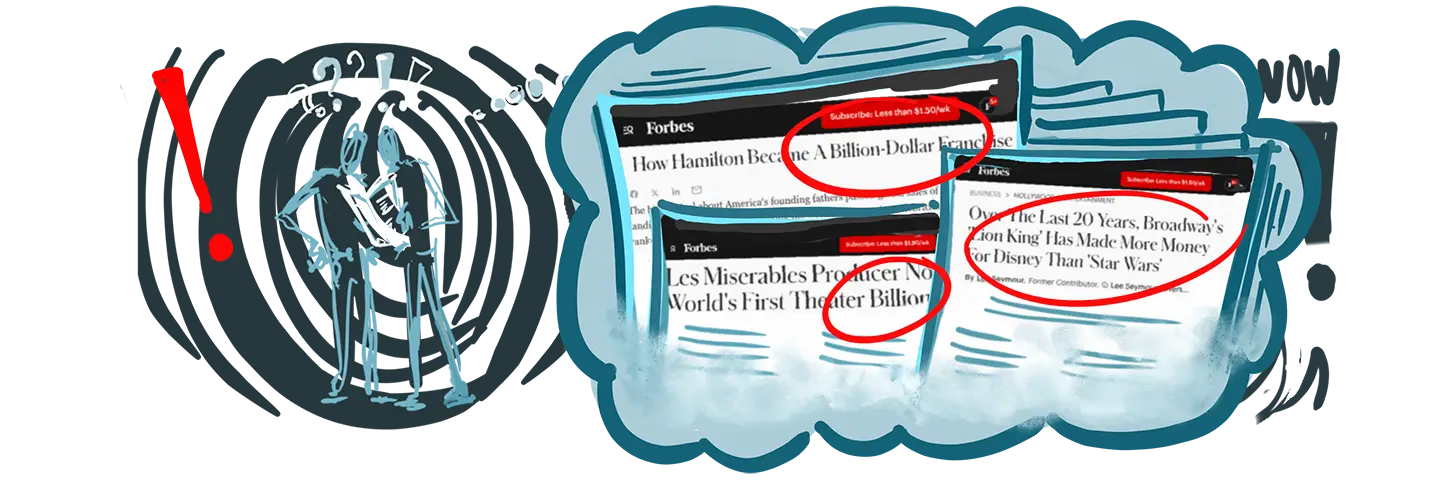
But it honestly wasn’t the money that drew us in initially. It was the millions and millions of people reached in the process.
A process that, to us, was just “telling good stories in music…“
We couldn’t shake the question! But there was just no way to stop what we were doing and dedicate ourselves to this full time in any practical way. Broadway shows are extremely expensive and are usually built around an entire team of established producers, theater companies, and book writers, who will typically acquire the rights to a particular show or story before contracting a team of lyricists and composers.
And no one was calling us for this show! I mean, they’d never even heard of us! If it was ever going to get done it would have to be on our own dime and our own time..

It really shouldn't come as a surprise that to really write with meaning and depth about love, mental illness, suicide, the loss of a child, forgiveness, hope, and miraculous endings…
…you need to experience a certain amount of life yourself.

There were just so many things that we couldn’t have known in our early 20’s when we wrote this the first time around. Not only myself and Bryan, but also Winston and Jaime (our soon to be new drummer and greatest band mate ever). Our combined experiences would eventually make this story every bit as much our own as it is about the characters. And, all these years and experiences later, I have gradually come to a better understanding of why I needed move back home and live here with these guys and our families:
Eventually Bryan and I came to the same conclusion: Yes, we “should” do this.
What followed was years of late nights and grueling yet incredibly rewarding collaborations. The original story had great bones, but like other famous rock operas (even the ones we revere), the narrative could have been stronger. We didn’t want to just write a great rock opera. We were trying to write something that could stand next to Les Misérables, Beauty and the Beast and The Sound of Music, but still have the toughness of Pink Floyd’s: The Wall — we set out to write an entirely sung-through musical (ahem… Rock Opera) with a story arc tight enough for Broadway, and rich enough for a feature-length animation.
So we dug into the librettos from some of the greatest shows ever written and started over. Writing it all scene by scene, beat by beat, the way Rodgers and Hammerstein would have. Every song and scene had to earn its place. Every moment had to move something forward — the story, the character, the emotional stakes. If it didn't, we cut it.
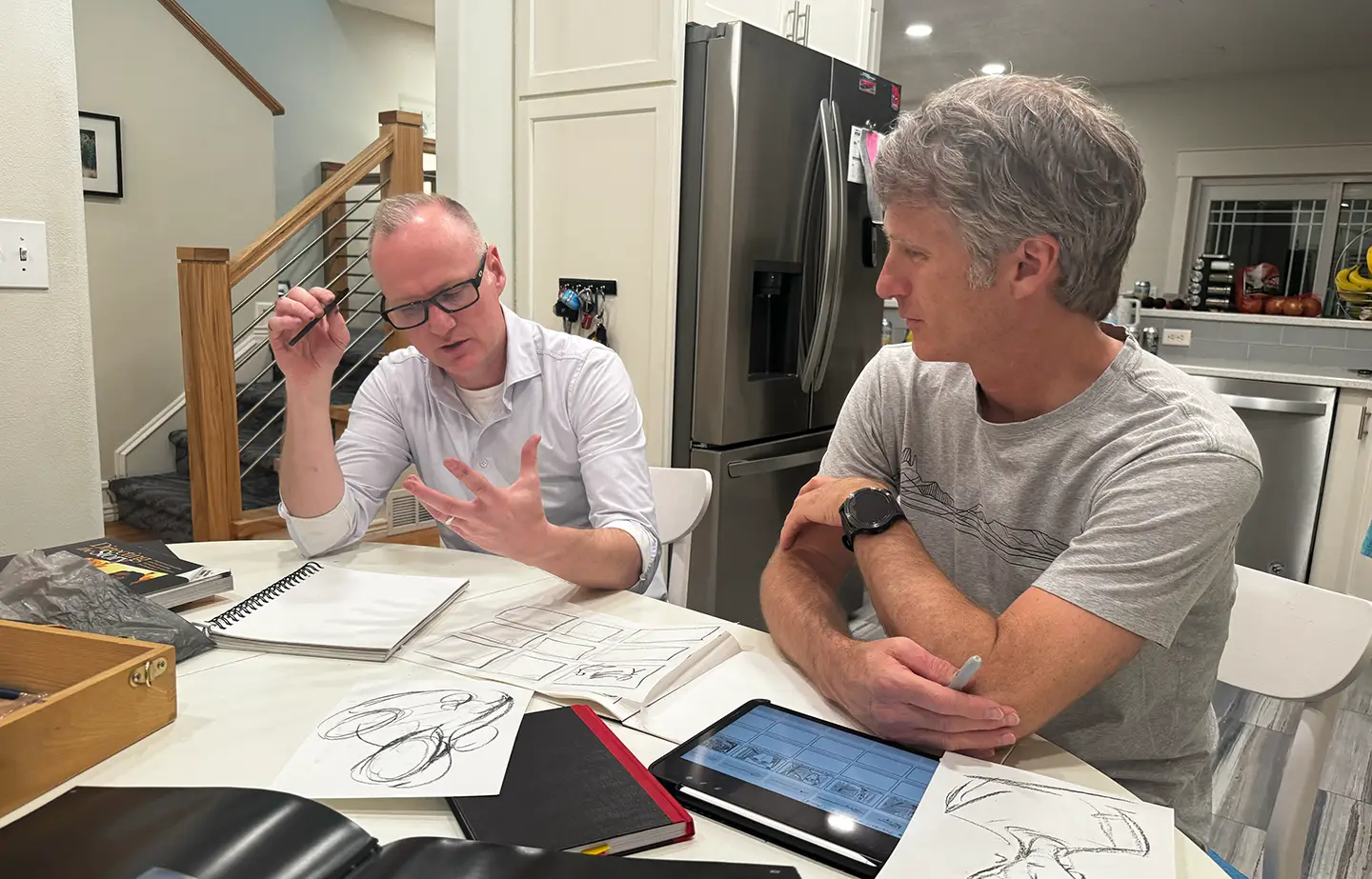
It is almost embarrassingly cliche, but if there is a common thread to all of the collaborations between Bryan and I, it's that we always want to make the world more livable for the underdogs…no doubt a hold out from our youthful rebellion against “the man.” Very early on, as we were contemplating sacrificing our evenings and weekends for the next 2-3 years, I recall telling Bryan, “this is only worth doing if it redeems the ‘wretched.’” Bryan said “amen.”
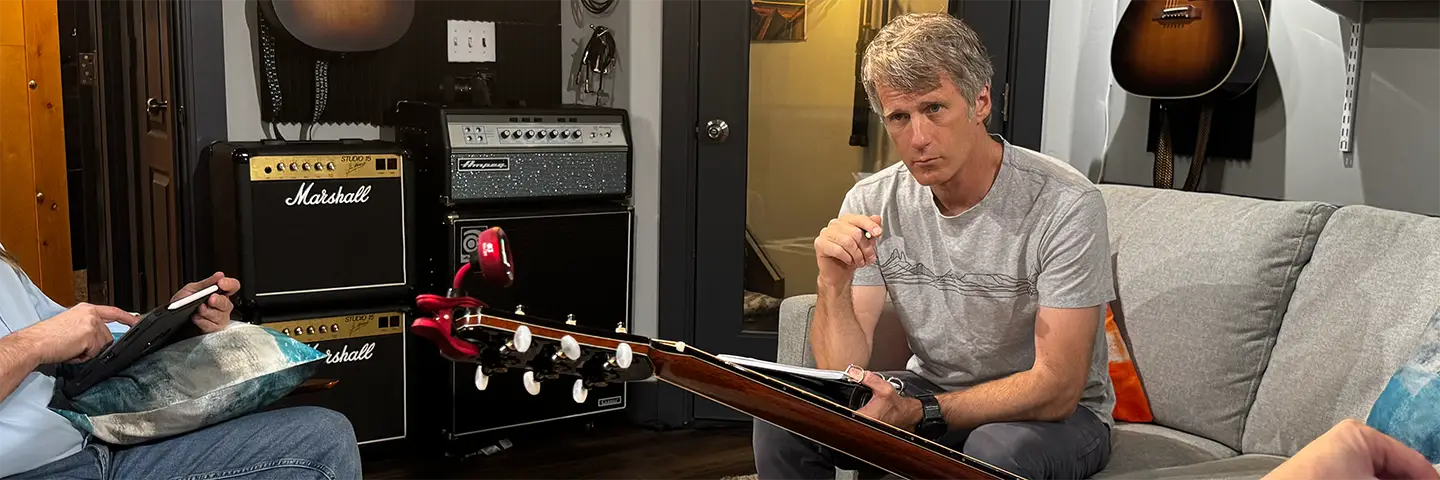
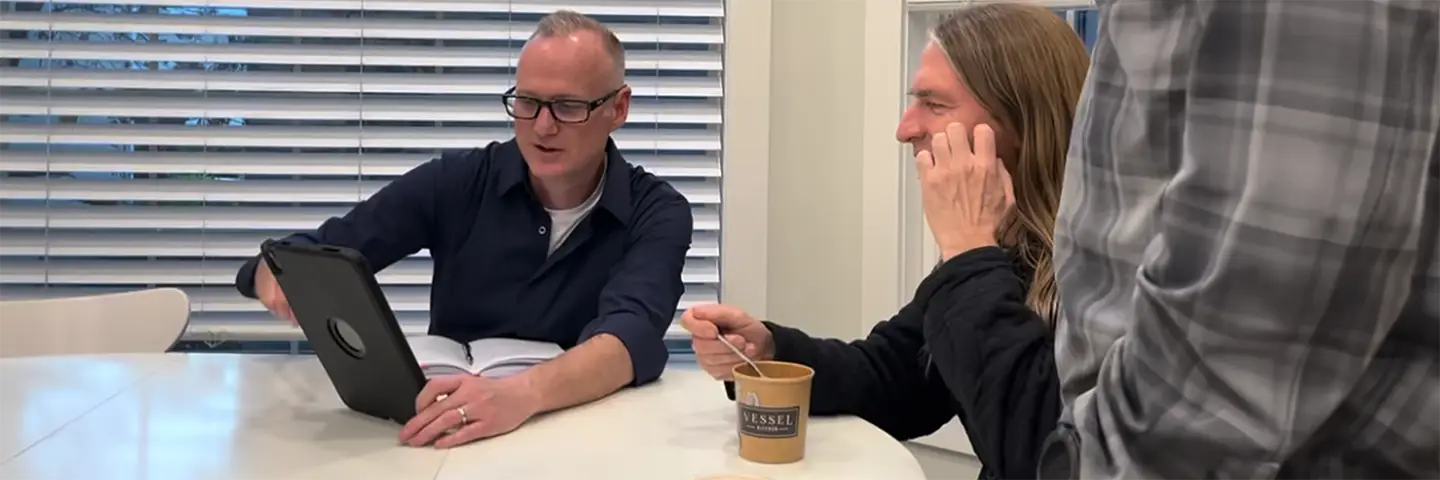
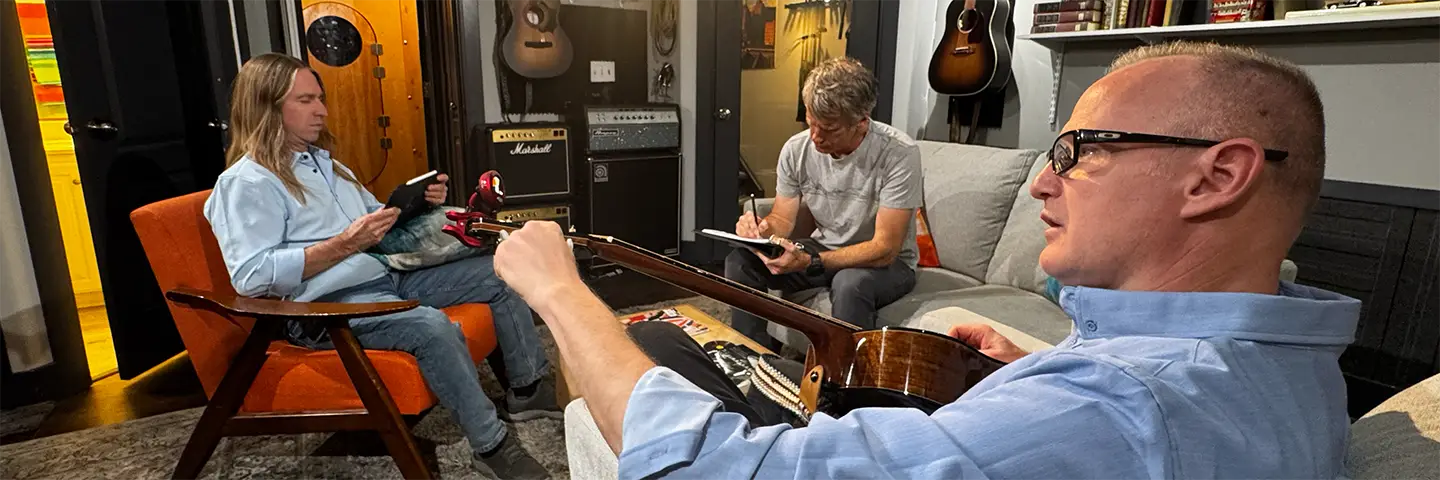
The true story at the core of Pleasant Grove is astonishing…and also a bit too painful to tell straight. We spent considerable time earning the family’s trust, their blessing, and ultimately their joy. The real events had to be honored, but also transformed into something the family and the audience could experience and walk out feeling inspired, even redeemed. That wasn’t easy.
Multiple storylines were written and abandoned. We wrote three previous versions of the last act. We constantly found ourselves cutting things we loved because they didn't belong. In the end, we wrote and recorded an astonishing 220 songs to get to the final 48.
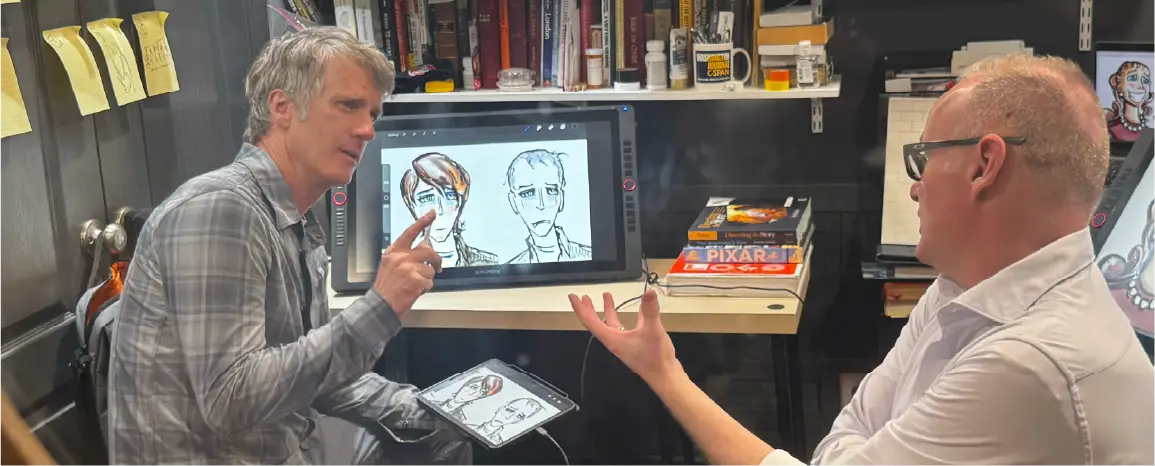
What has emerged is a story that makes you laugh and cry…that breaks your heart and then makes you want to be a better human. And it ends in what we hope(!) is one of the greatest crescendos into grace and redemption you’ll ever see.
Very early in the rewrite, we faced a pivotal creative dilemma. Several holdout songs from the original show – songs we genuinely loved – weren't working. After painstaking debate, we replaced them all with a single song: Maple Lane. It became the defining example of what we were after. It's the quintessential "I want" song for Alden, one of our central protagonists — written not with characters explaining themselves to an audience, but as natural dialogue. As if the viewer stumbled into the scene uninvited. That's now the standard for every lyric in Pleasant Grove.
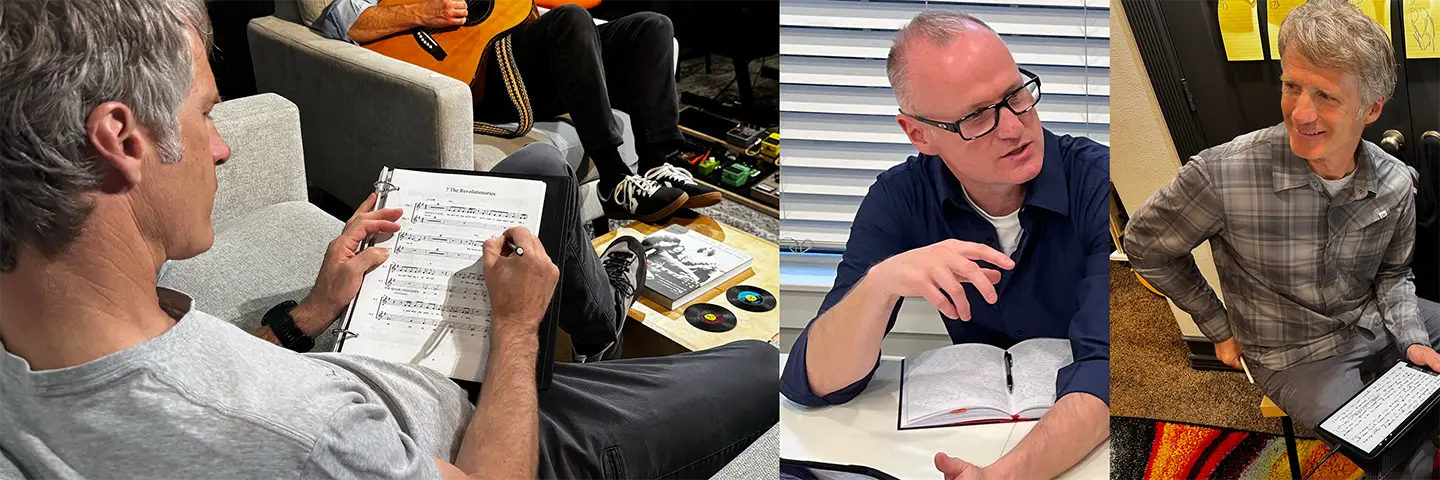
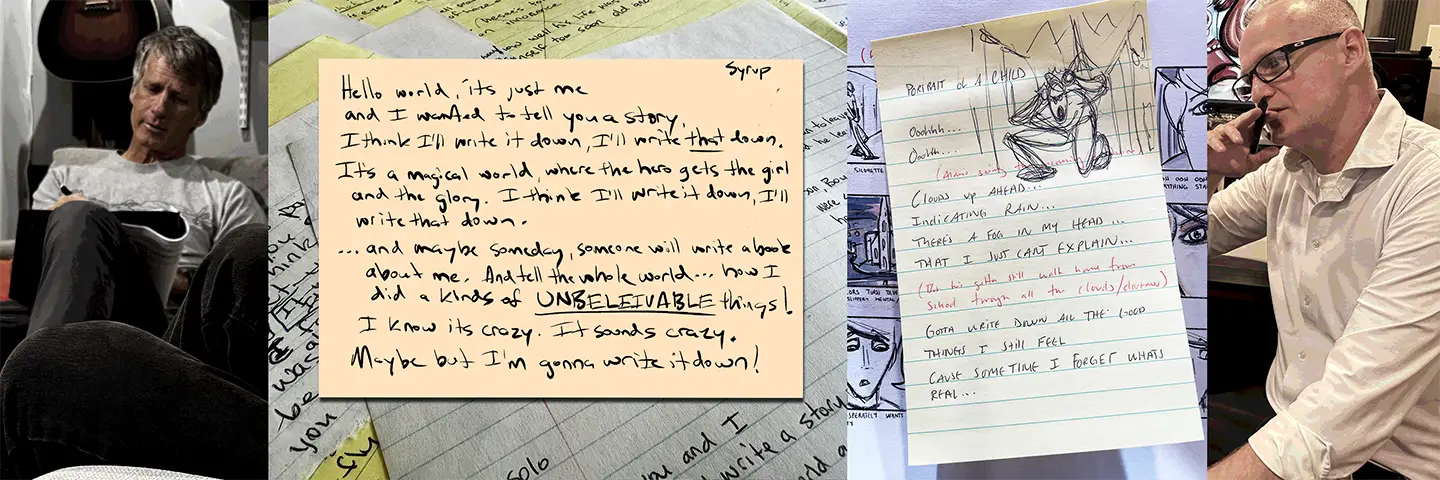
Most musicals are (ironically) written with music last. Story and plot are almost always defined first with lyrics and “put to music.” We’re by no means pioneers in taking a different approach. In fact, most rock operas are written music first, and it shows. Even the best ones are often filled with incredible songs, and great lyrics, but are also, generally, conspicuously lacking when it comes to the story. We simply feel they all must be done as one great whole: story, characters, lyrics, and music written together in one clear setting.
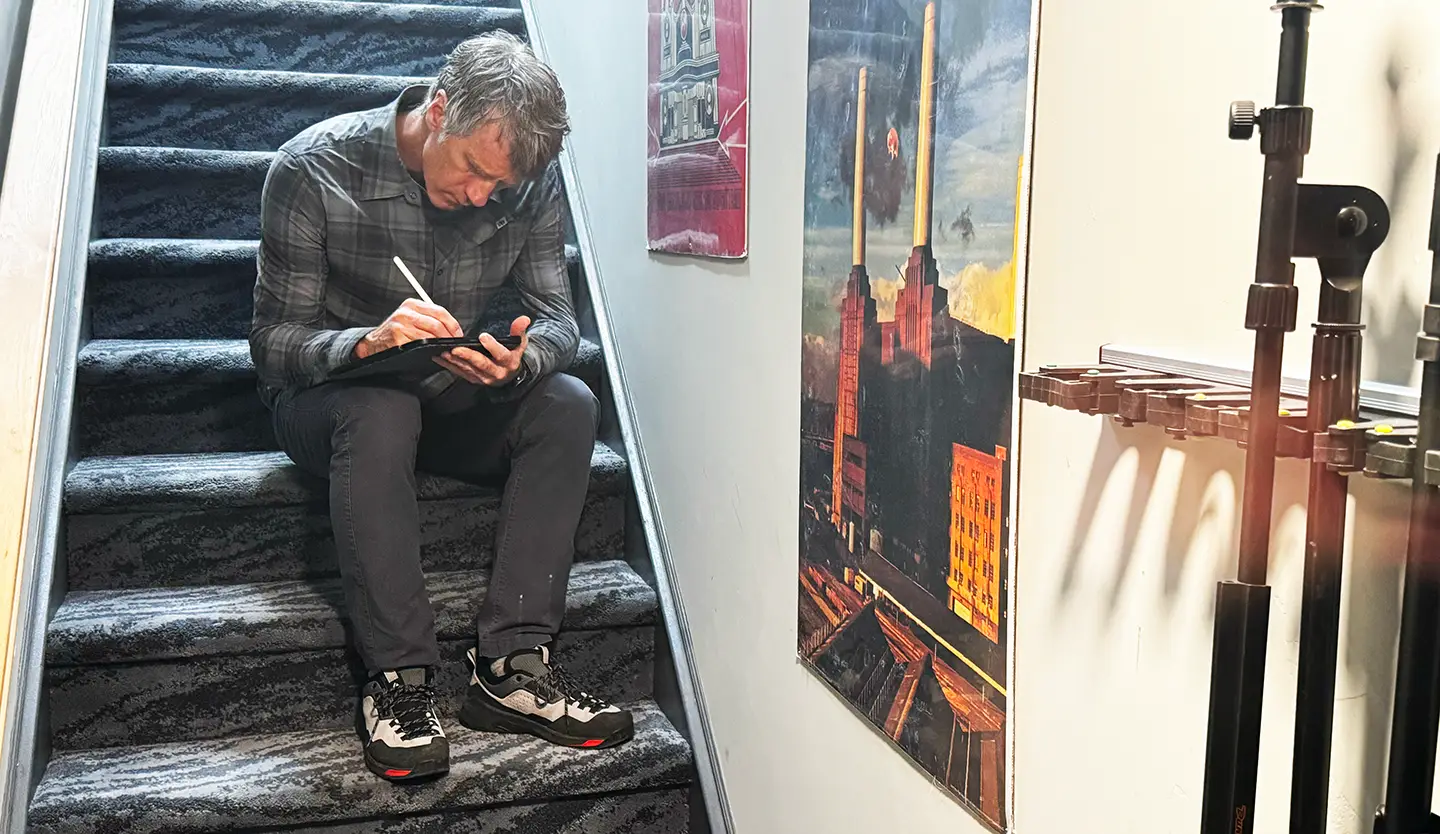
Writing with the guardrails of a Libretto turned out to be the secret sauce that kept us on track. If every line didn’t carry the character, or advance the story arc, or felt forced…we cringed.
This can be painstaking work! Sometimes it takes hours to find the perfect line that actually sounds like real dialogue. Other times an entire scene flows to paper almost in real time. Either way, the pay off is something that passes the “cringe test,” and keeps viewers intently engaged with the characters, scene and overall story.
In the end, every scene must be believable, and every character relatable. Lyrics aren’t just a crucial part of that. They’re the only way to verbally communicate it. So they have to be perfect.
For us, music composition is the foundation of the emotional and narrative intent. We start with knowing what a scene must be about, find a chord progression and melody that gets us there emotionally, and write from that place.

I discovered Sigur Rós while working on my Post Doc research in Iceland — and they've been something of a soundtrack for my life ever since. Despite having entirely Icelandic lyrics, every song takes me to a place, and makes me feel something marvelous. Music invokes intense feelings, even without context.
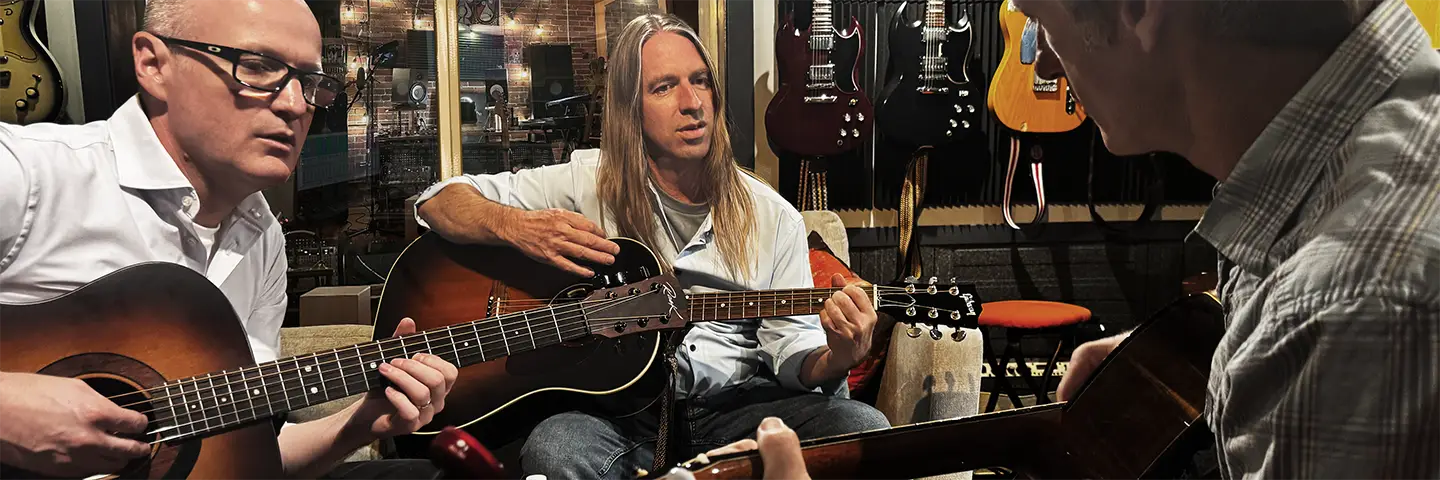
So many years ago, when someone in the band came with music, we’d play it again and again until the song took us to a place and into a story we could write about. When you approach it in this way, lyrics seem more about discovery than creation.
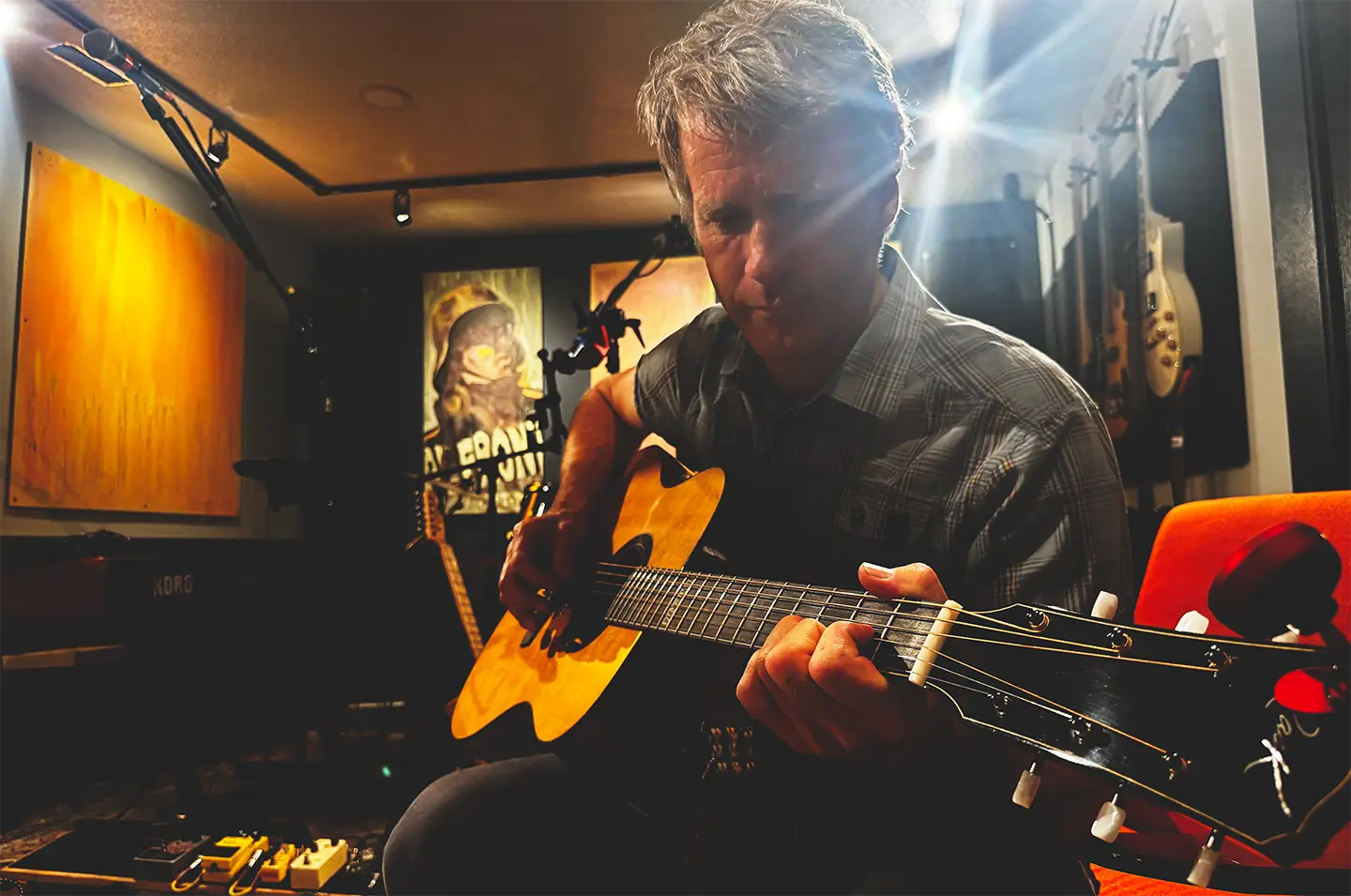
Think the Darth Vader theme song vs. the Rocky theme song. Or the Jaws theme song vs. Chariots of Fire. It’s ALL non verbal. And yet... those songs in your head right now immediately told you radically intense stories in milliseconds. That’s the power that music has in storytelling. And that’s why every scene in the show is based first around the song and the story IT is telling.
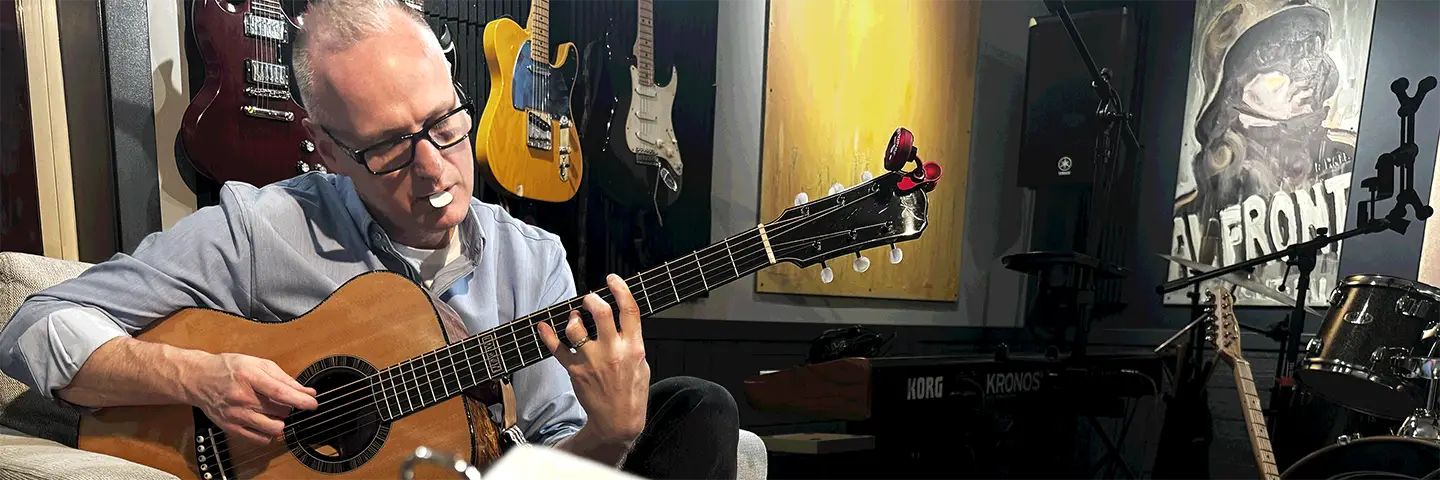
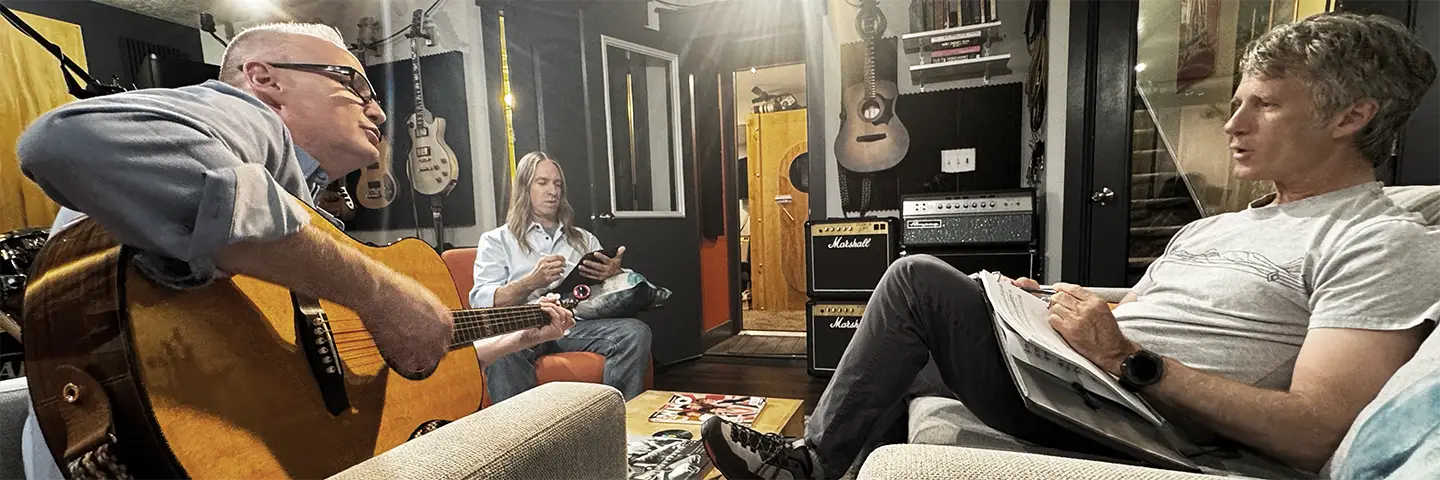
Easy peasy, right? Well, recall almost 75% of the songs didn't make the cut.
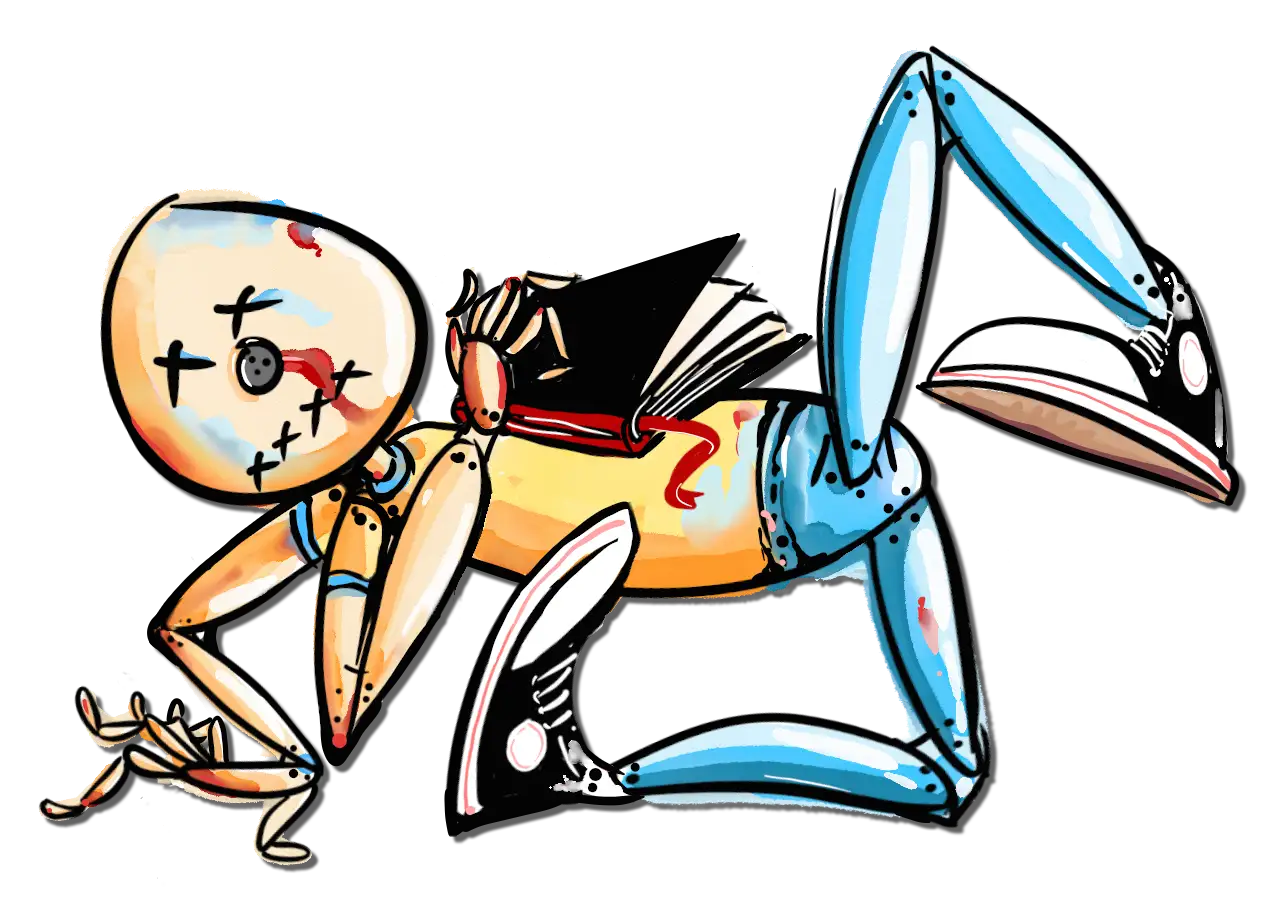
("...You can't hear a ragdoll cry...")
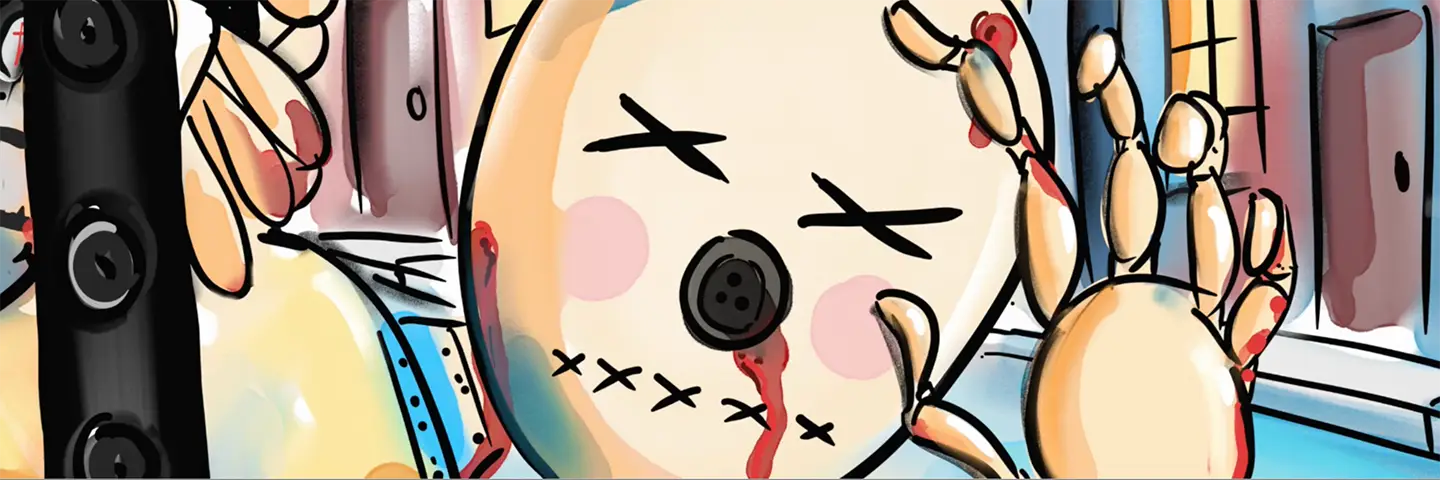
One of the show's most iconic visual elements came out of a story need. Alden, who battles constantly with his mental health, is repeatedly taken beyond his emotional limits in the story. We wanted to show this to the audience, to create a caricature, if you will, out of his coping mechanism. What began as a set of lyrics, became a full blown character. The symbolic and very real importance of the ragdoll is why this character has become the logo mark for Pleasant Grove Rock Opera.

Characters provide personal connection, emotional access, and “stickiness” for the important messages in a story. Ideally, we form a relationship with the characters. When done right, we want to know and be with them, comfort them, love and hate them. And, as with real relationships, these connections stay with us, and motivate us to feel and act differently…and to share and come back(!).
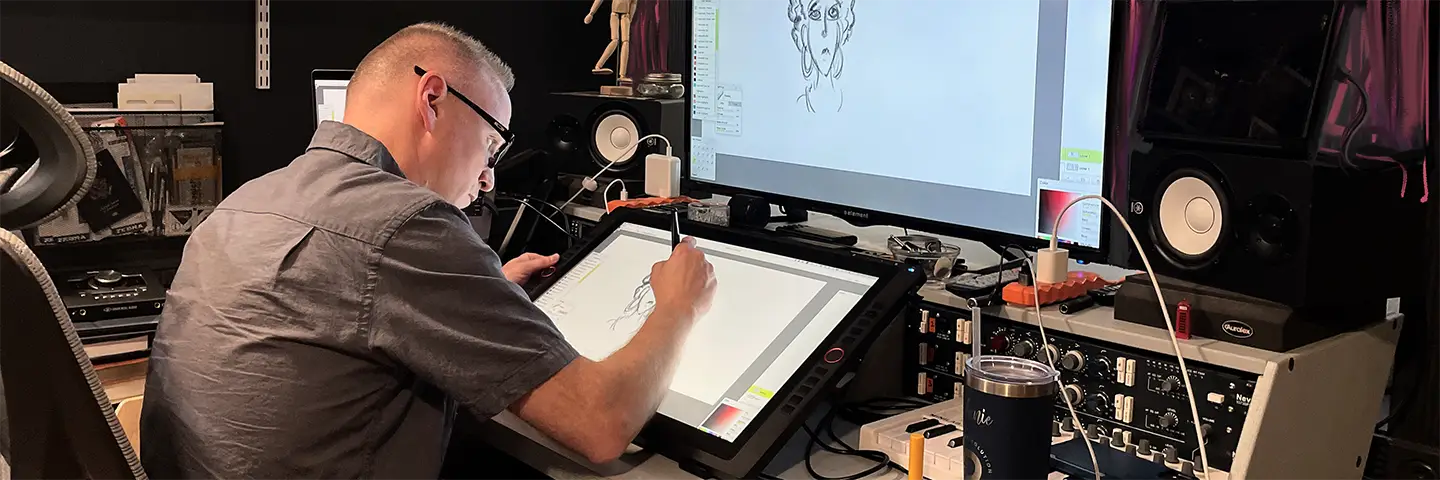
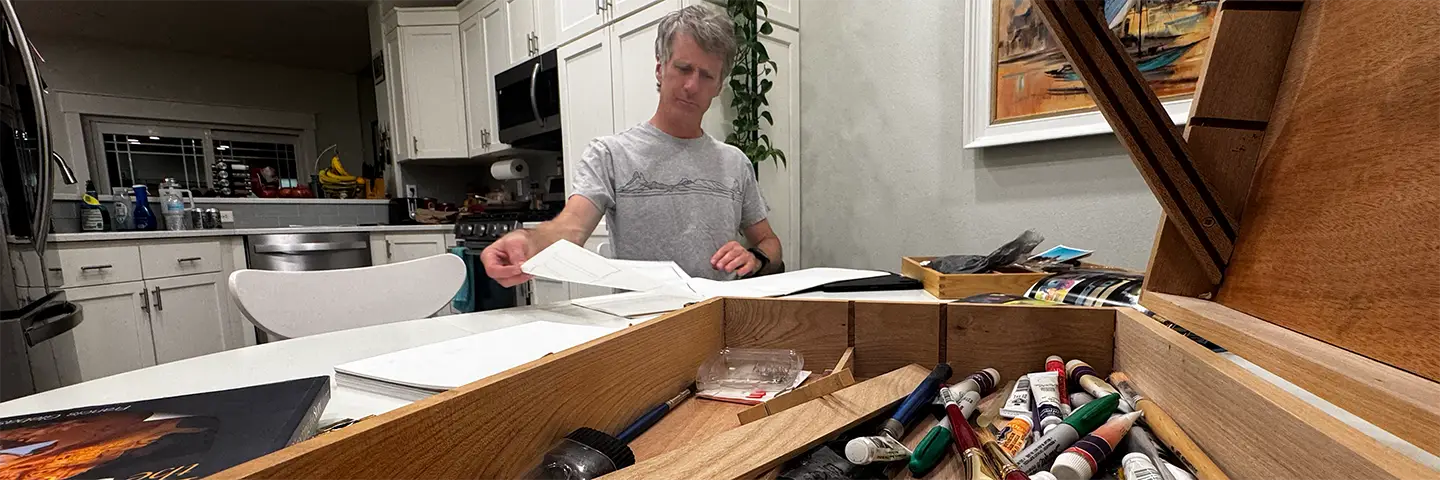
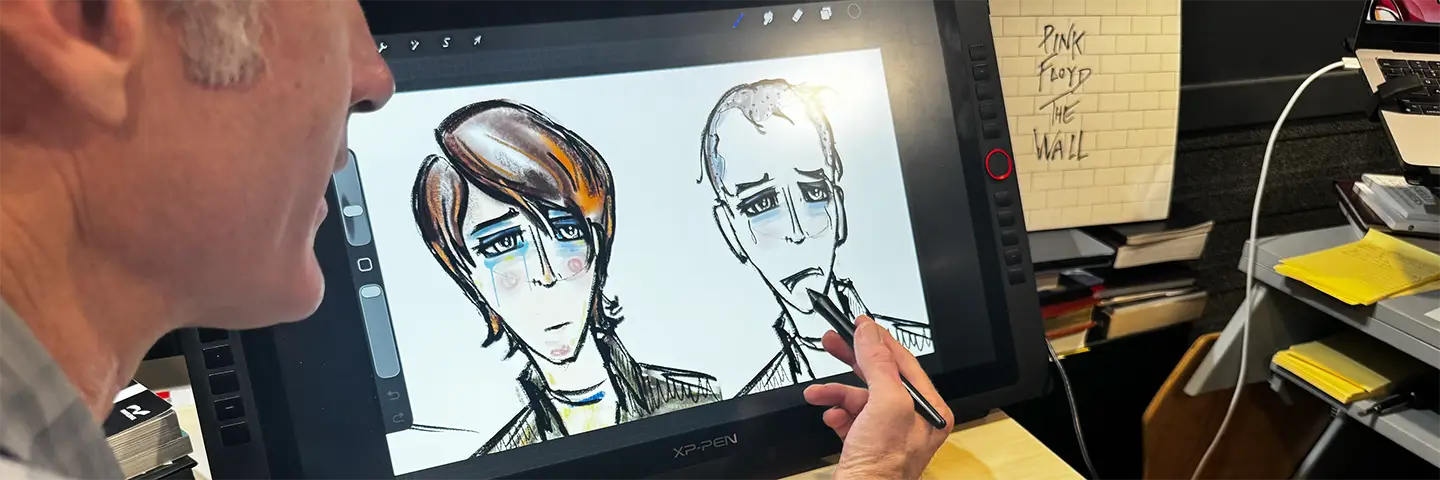
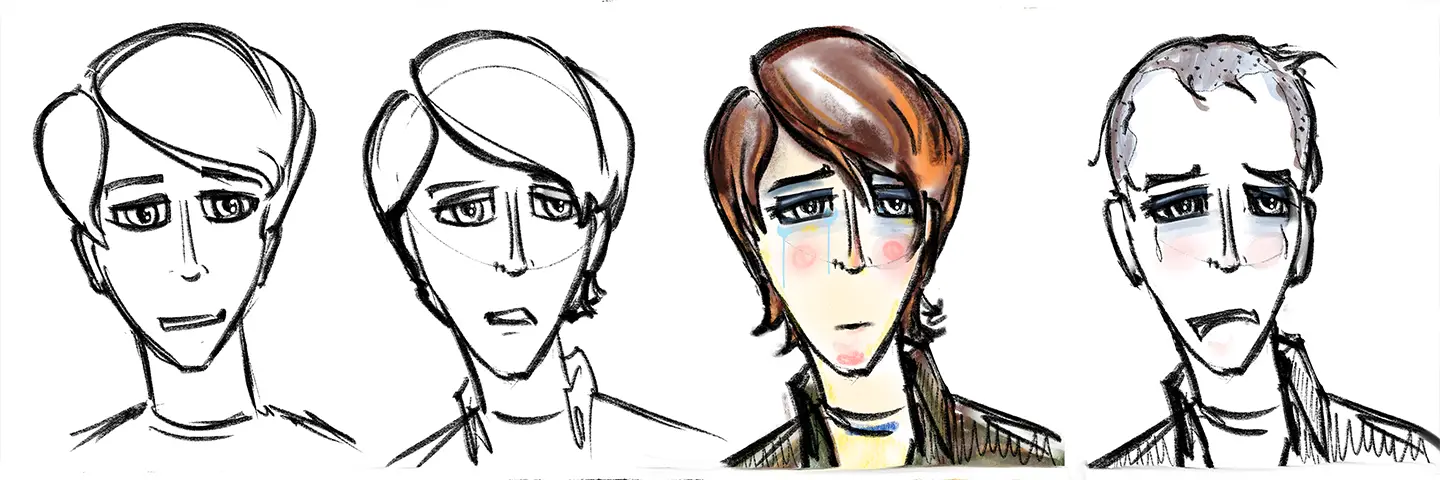
Each character must be fully realized – not just as a role or archetype in the story, but as a complete human being with history, tension, and some truth at their core. That process begins with conversations – asking questions about who this person is, what they want, their fears, their qualities.
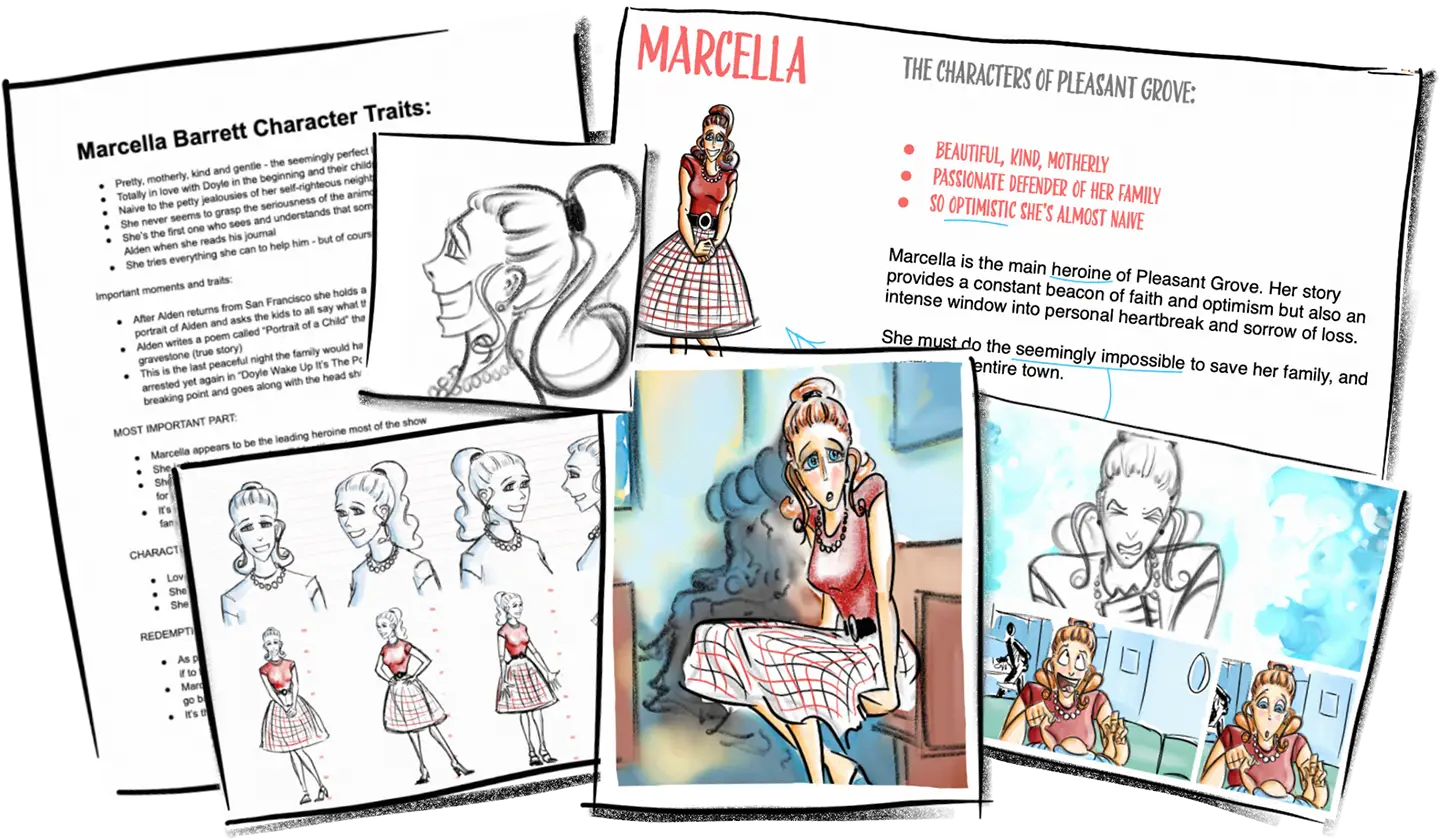
I understand how absurd that may sound. But I can’t tell you how many times the characters have seemed to come alive and almost write their own songs and stories for us (words and all!) The further down the road they travel, the clearer they all become. Then before you know it, all kinds of songs, melodies, and lyrics seem to just jump out of these sketches and sing the parts for themselves in real time. That will only make sense if you truly believe the characters, songs, lyrics, story, and settings, must all be done as one complete whole.
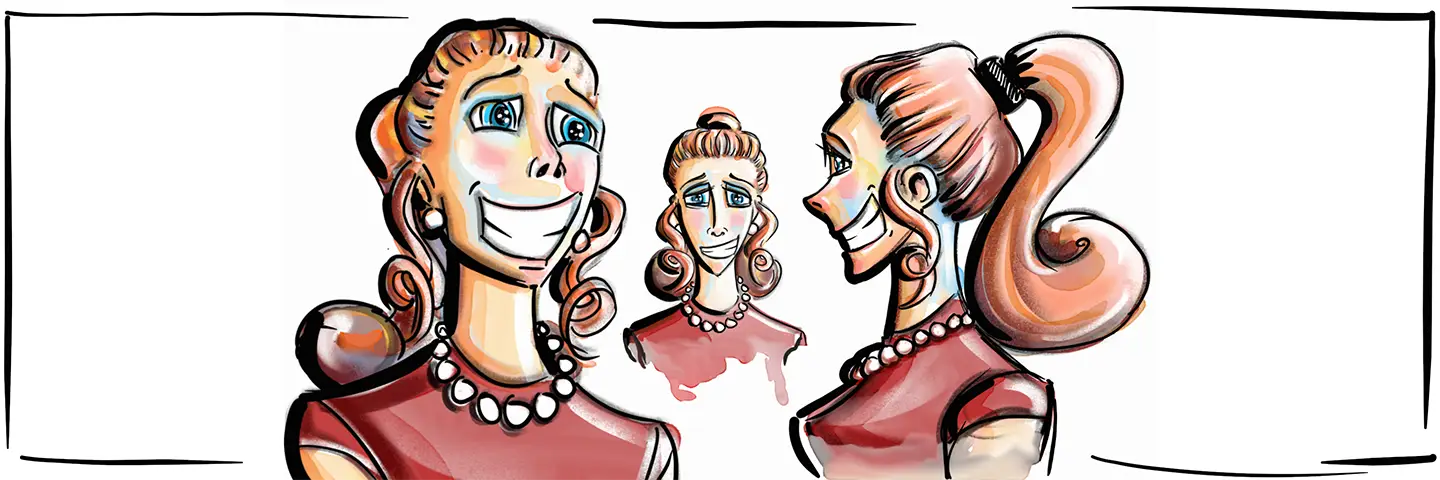
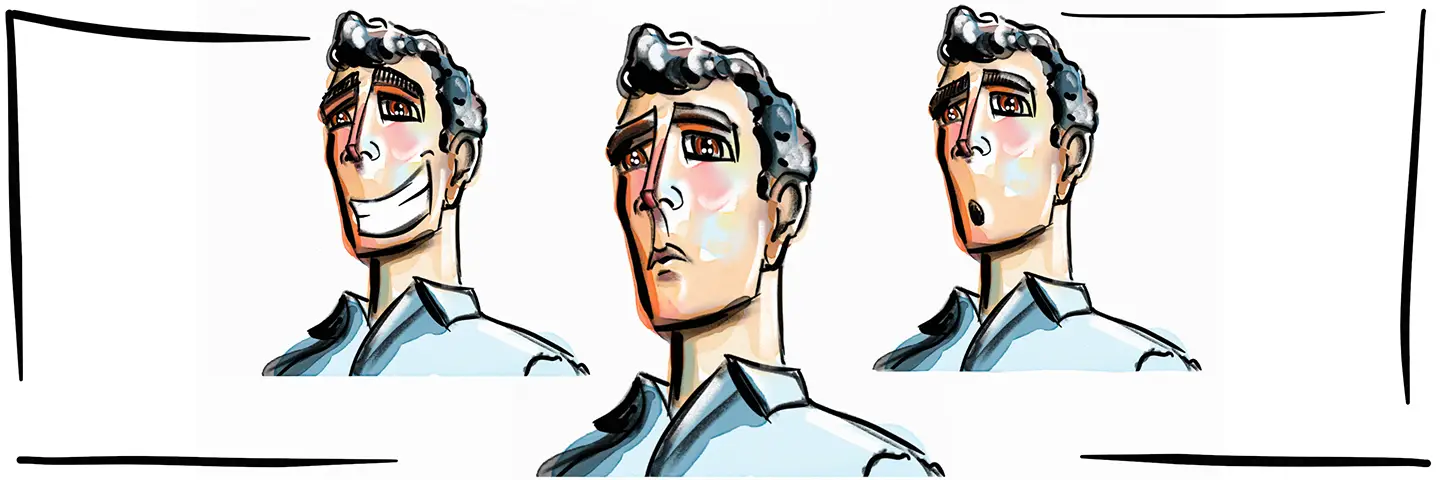
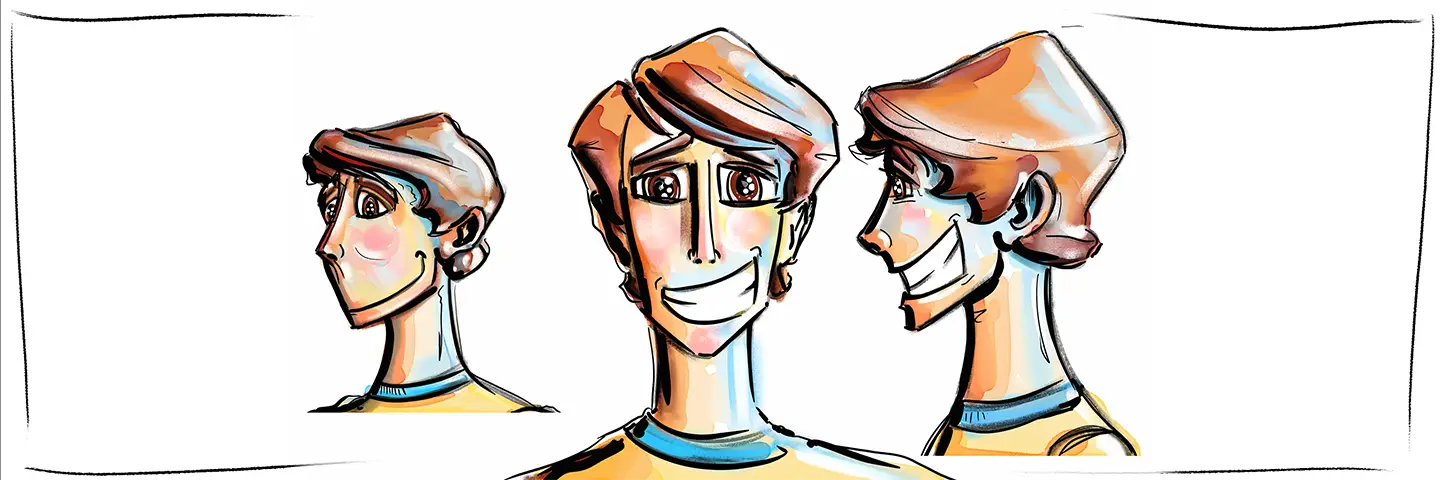
Every character in this show has been through that entire journey. Some of them went through it many times before we got it right. This is something we've learned can’t be rushed. Every character carries emotional weight through the story arc that lands differently for every viewer. The deeper and more deliberate our work on the characters, the greater the opportunity to connect.
THE PENULTIMATE COMMINICATION
Storyboarding is the glue that brings all elements together… It's the fastest, most honest way to capture what we are trying to express – the whole that exists in our heads before it exists anywhere else. It’s also how we know the whole story is working — that the lyrics, the setting, the character's internal life, and the music are all pulling in the same direction.
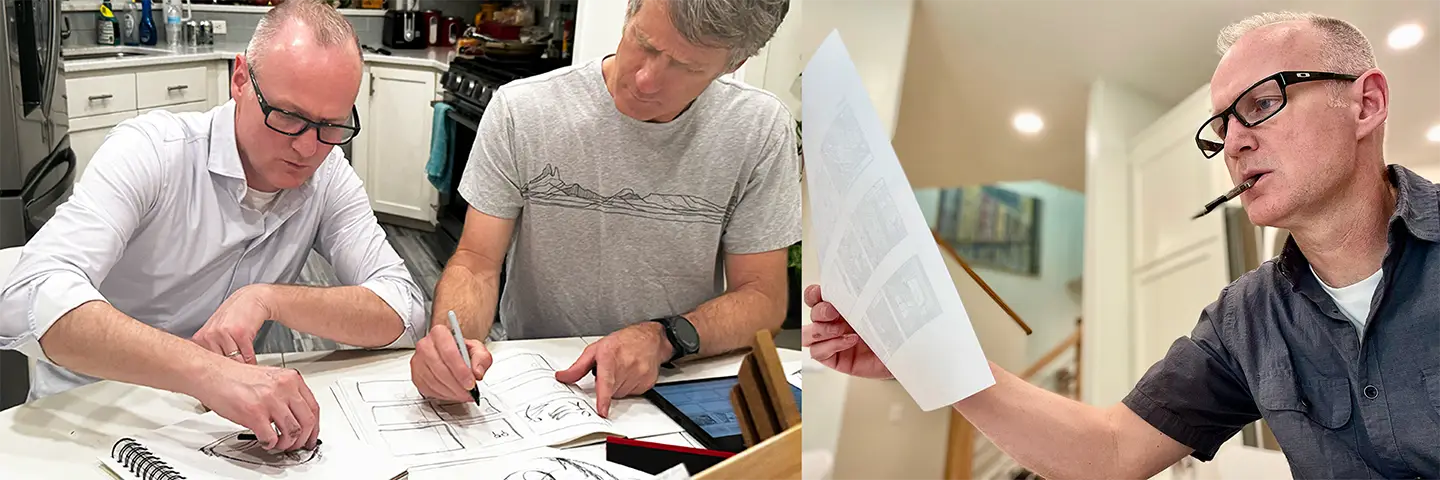
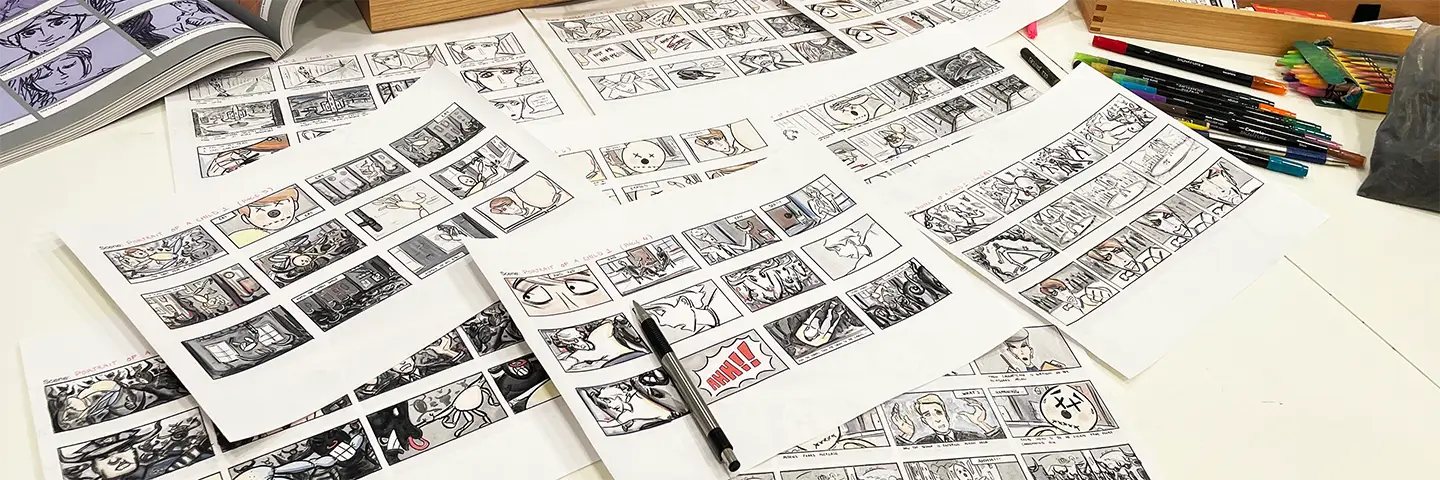
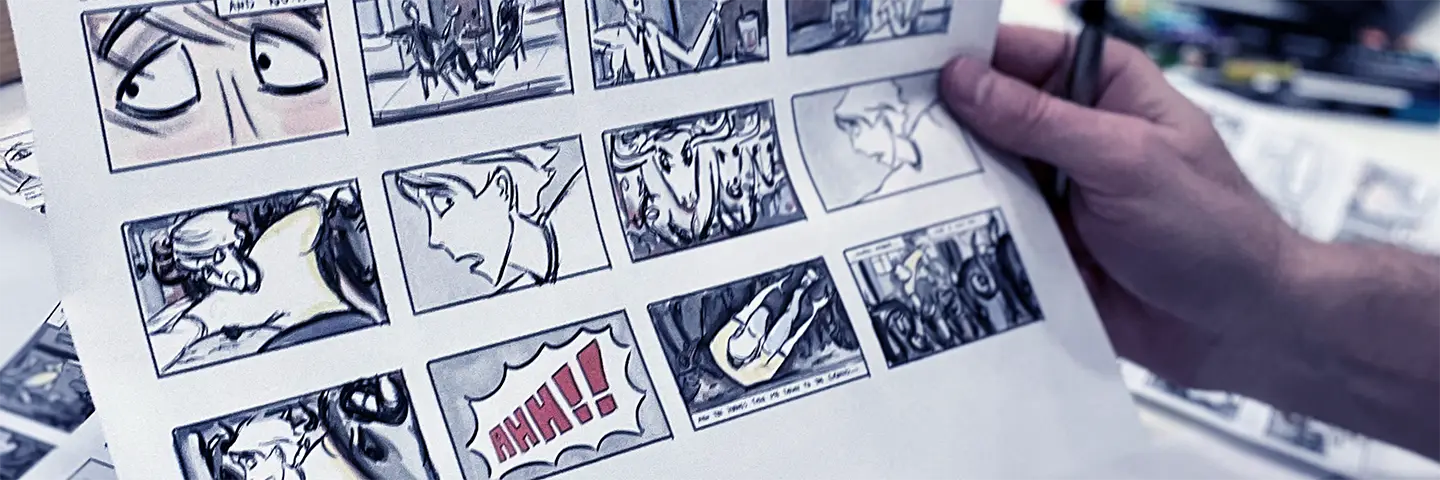

Even the best music and lyrics only go so far. You can write a masterful line and still not come close to capturing the whole story. Dialogue driven lyrics let you be a bystander for what's happening in the room. The storyboards help us communicate what’s happening in the character's mind. We need to provide access to both. And, let’s not forget the storytelling that is still happening during a face melting guitar solo (Bryan’s words not mine!)…believe me, there is no shortage of those!
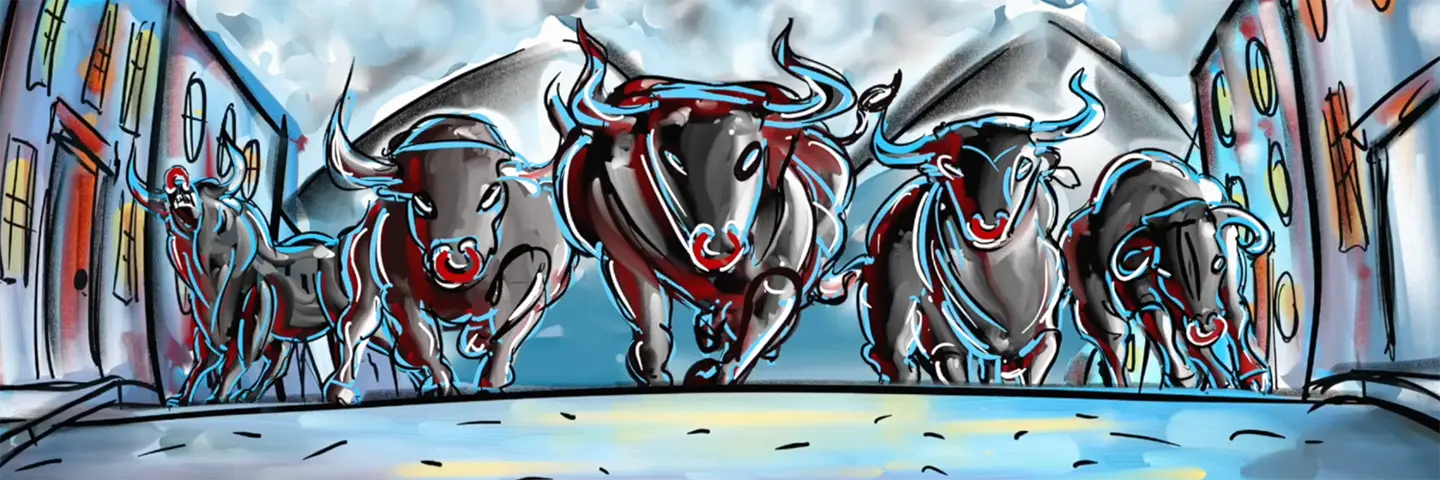
For example, here’s what’s happening visually during the guitar solo on Portrait of a Child 1: Alden is getting chased by the bulls in his mind. The townspeople of course can’t see them and are going about their days.

As the bulls overtake him they toss him around “like a ragdoll.” Alden transforms himself into an actual ragdoll as a coping mechanism so he doesn’t have to feel the pain. He finally extricates himself from the stampede by grabbing an approaching fire escape ladder only to catch a reflection of a younger, happier version of himself in the window...

As he stares at his old self in the reflection he sees the sadness that has befallen him since then and there’s nothing the ragdoll can do to help as the reflection fades away.

And suddenly, everyone in the room is seeing the same thing.
There are so many moments in this show where the emotional truth is entirely visual and internal. No lyrics can carry that without becoming cheesy. No stage production, regardless of budget, can fully get you there. This is ultimately why I was unsatisfied with the limitations of theater alone. Not because the live productions weren't extraordinary – they were. But there is so much of this story that we simply felt had to be shown.
BACK IN THE DAY WHEN THE MUSIC WAS REAL (to reel)
One of the reasons it took us 5 years to completely rewrite and record the opera is because of our desire to make sure the sounds we create come from gear and recording techniques that sound like the music could have come from the same time frame the story takes place in (roughly late 1960’s - 1970’s with a touch of early 1980’s in the ending).
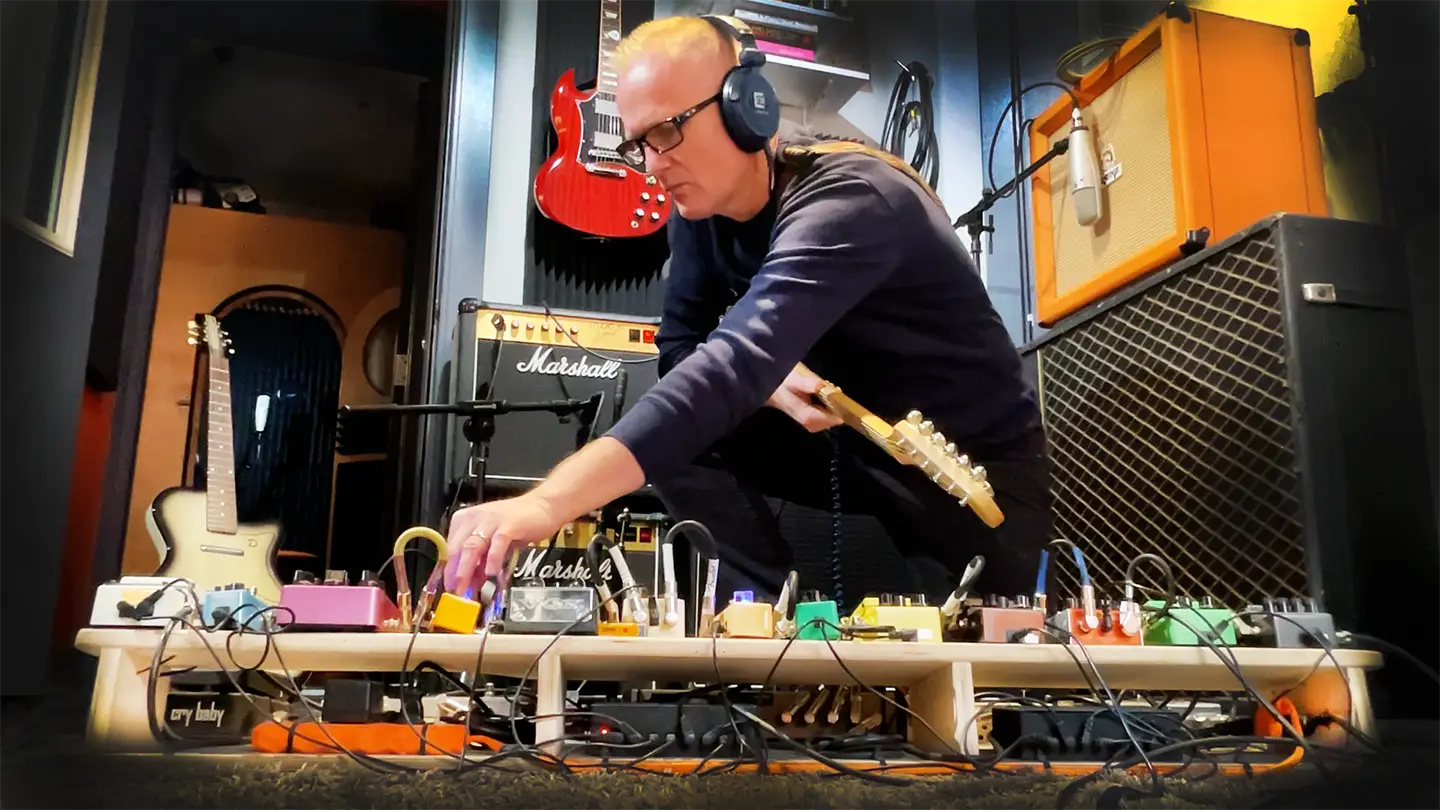
We’re not puritanical about it per se. We do use modern equipment for all the obvious reasons. But we are dead serious about making things as authentically time period appropriate as possible. And that usually means a very ‘analog’ approach to almost everything we do. And so even when a large part of the visuals for the live shows are all programmed, the band is always going to be four guys up there playing our guts out every time with no safety nets.
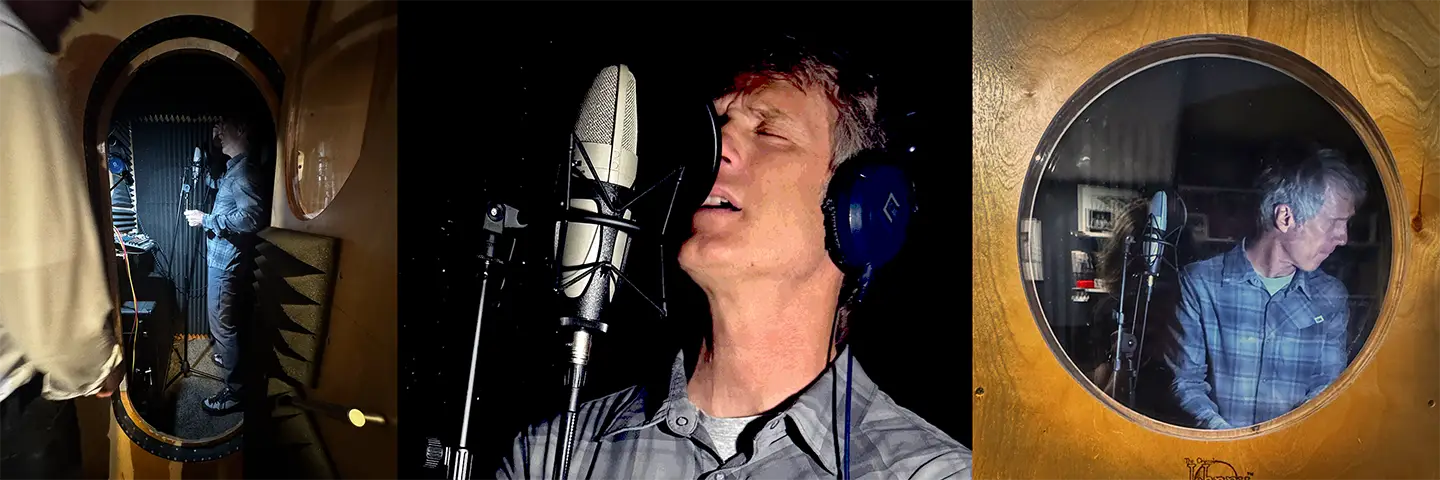
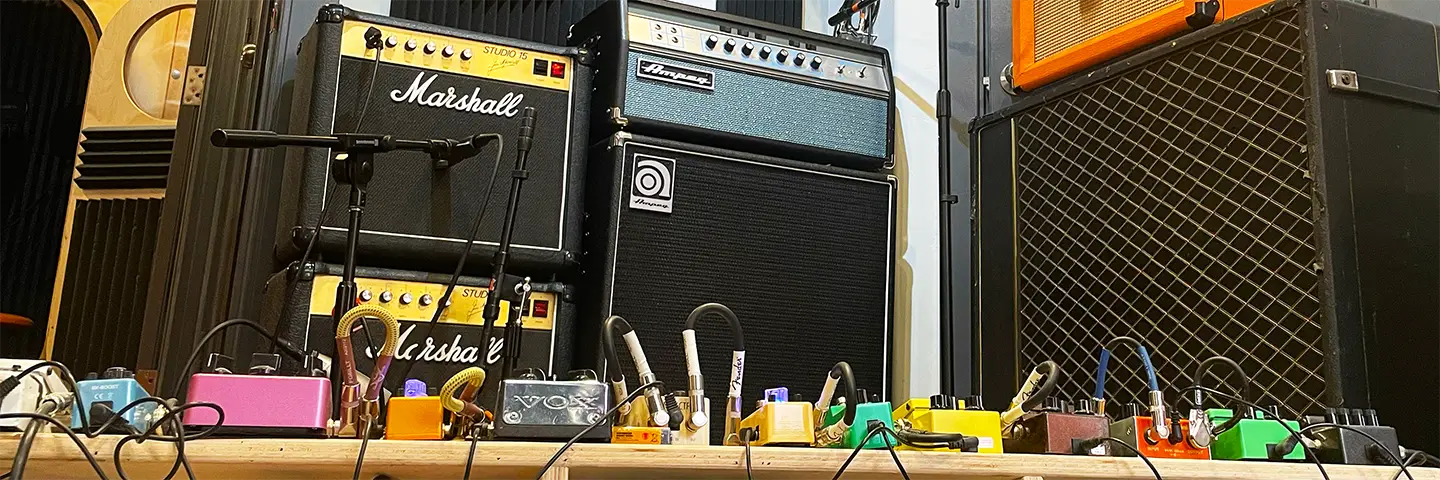
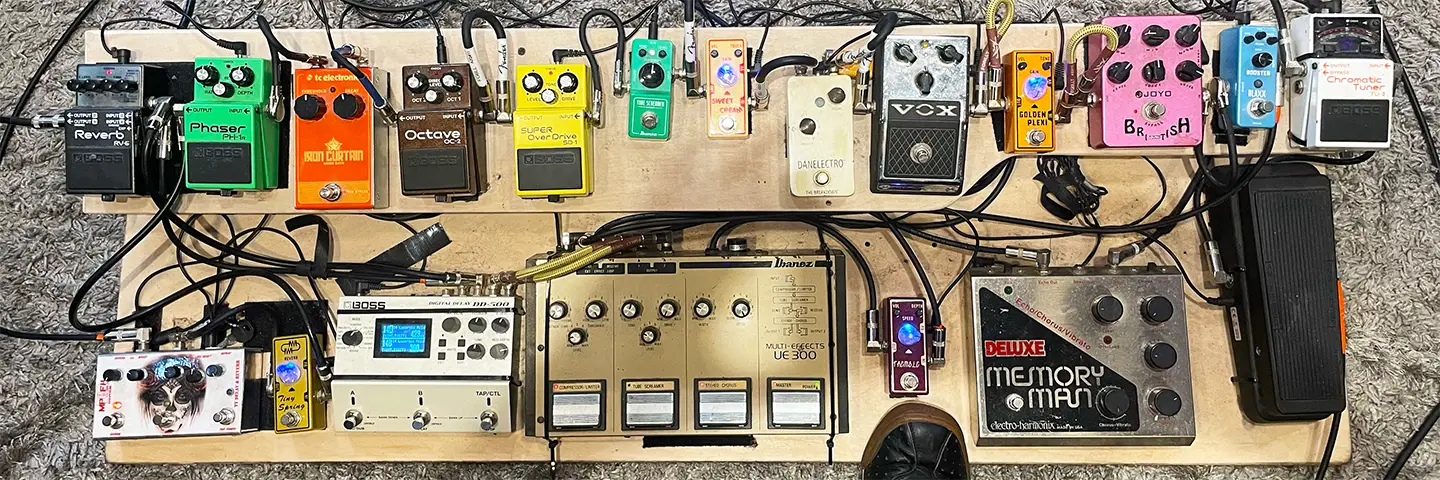
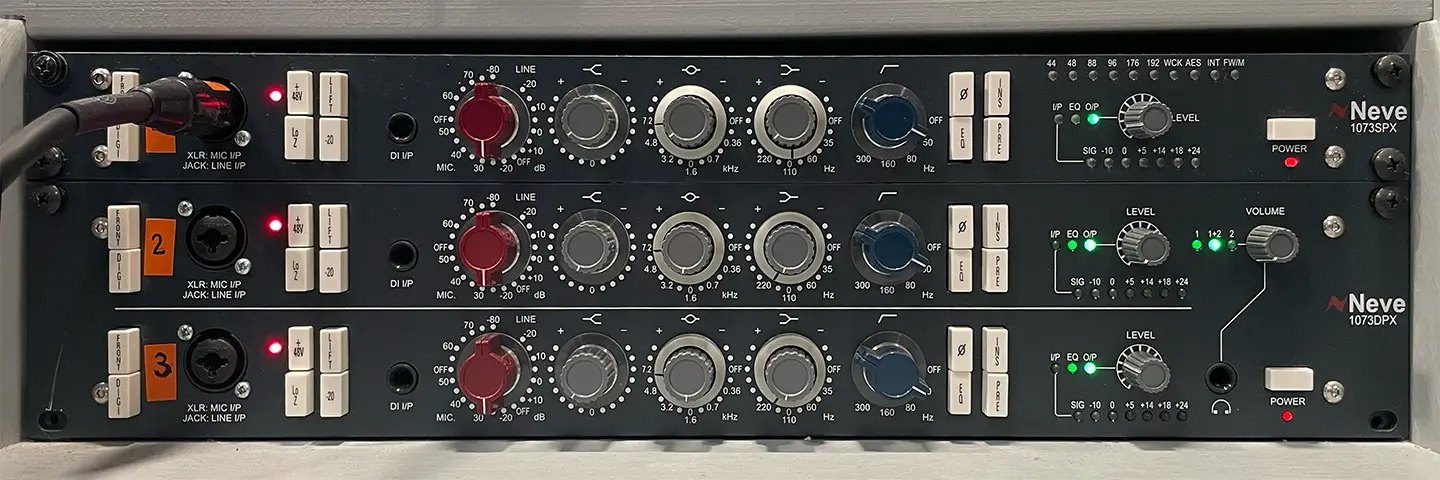
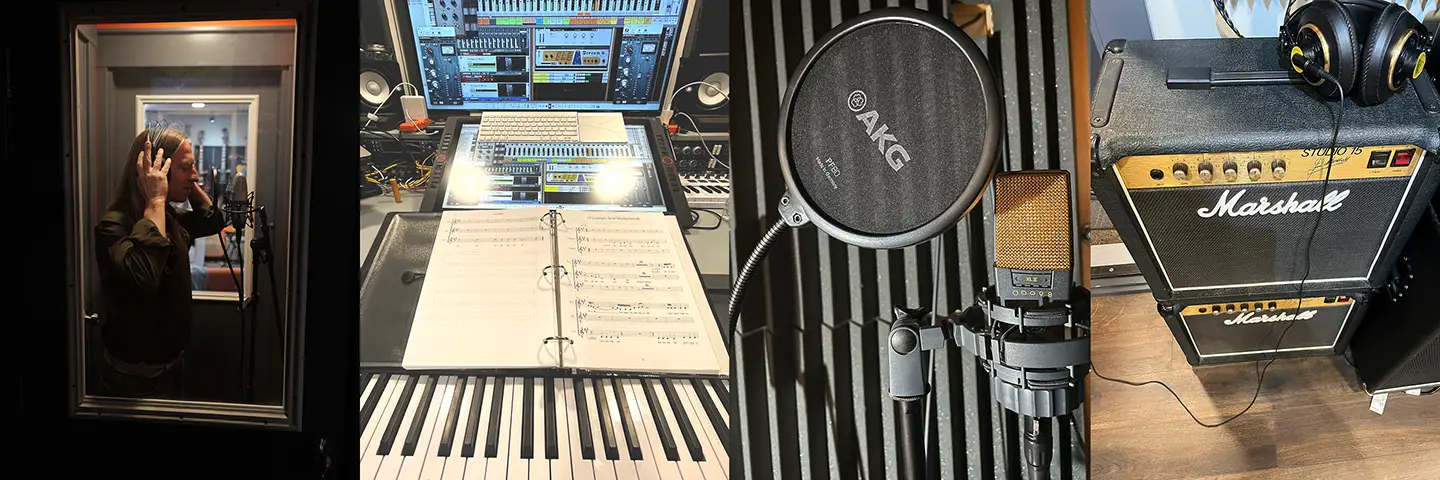

Once we’re certain a particular song has legs, we commit it to tape (i.e. ‘record it’). Ocassionally we make some demo versions of things here and there. But it’s rare. What typically happens is we craft an entire song, often with at least a rough storyboard or sketchup of how it fits into the story, and then we try to record the “finished” version of that song so we can really know for sure if it’s going to work or not.
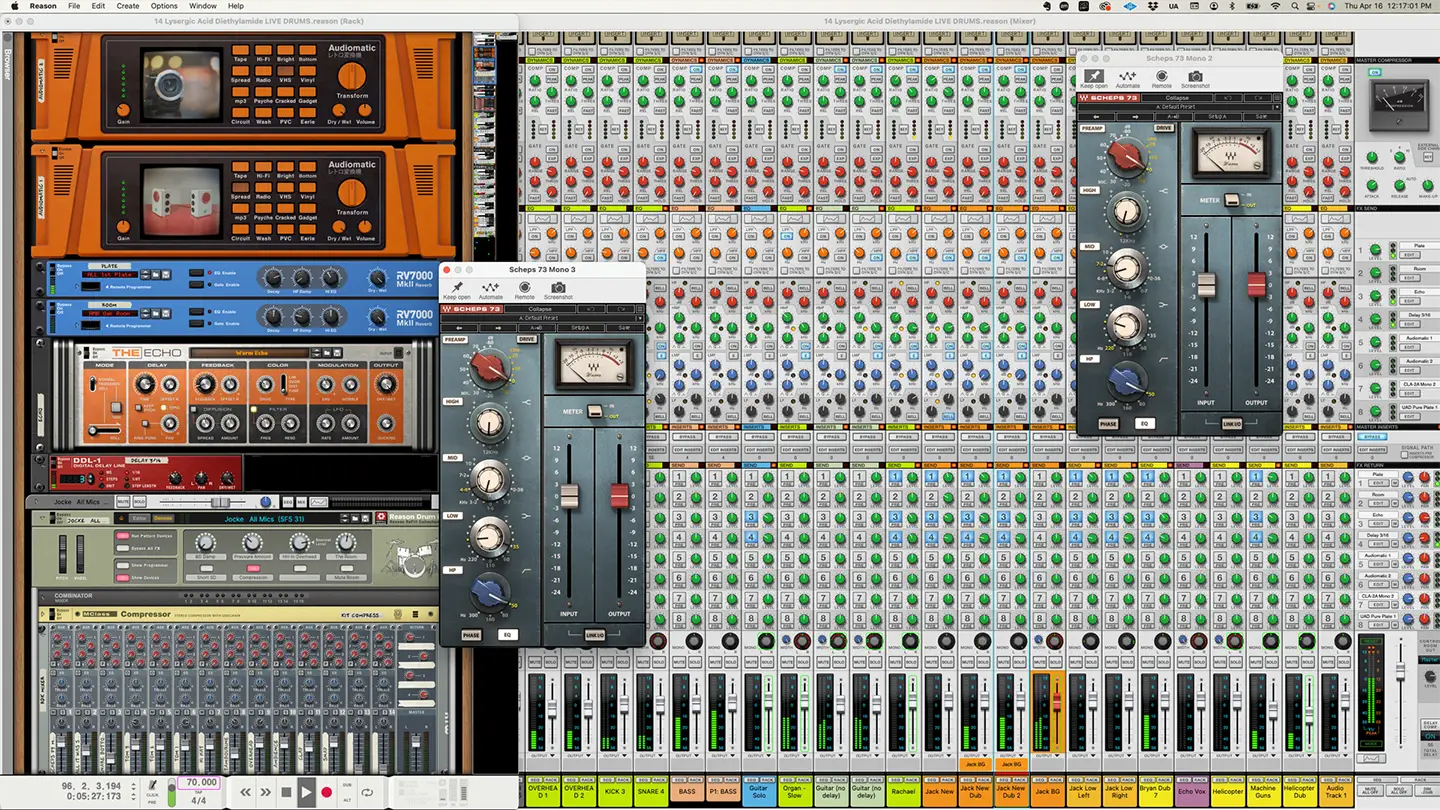
Of course, if the song is excellent for the overall story, even a demo can give you a good idea of what’s to come. But all the more reason to take the time to get it recorded right. I can’t tell you how many nights were spent reworking sounds and mixes until the sun came up. But that made all the difference in the world. Yes, we ultimately had to cut 70% of those “finished” recordings. But we always knew we gave each one everything we had.
THE POWER OF PLACE
From the earliest storyboards, Pleasant Grove the place has been developed with the same deliberation as Pleasant Grove the story. This is because a well-established sense of place and belonging can elicit as strong an emotional connection as even the characters and songs.
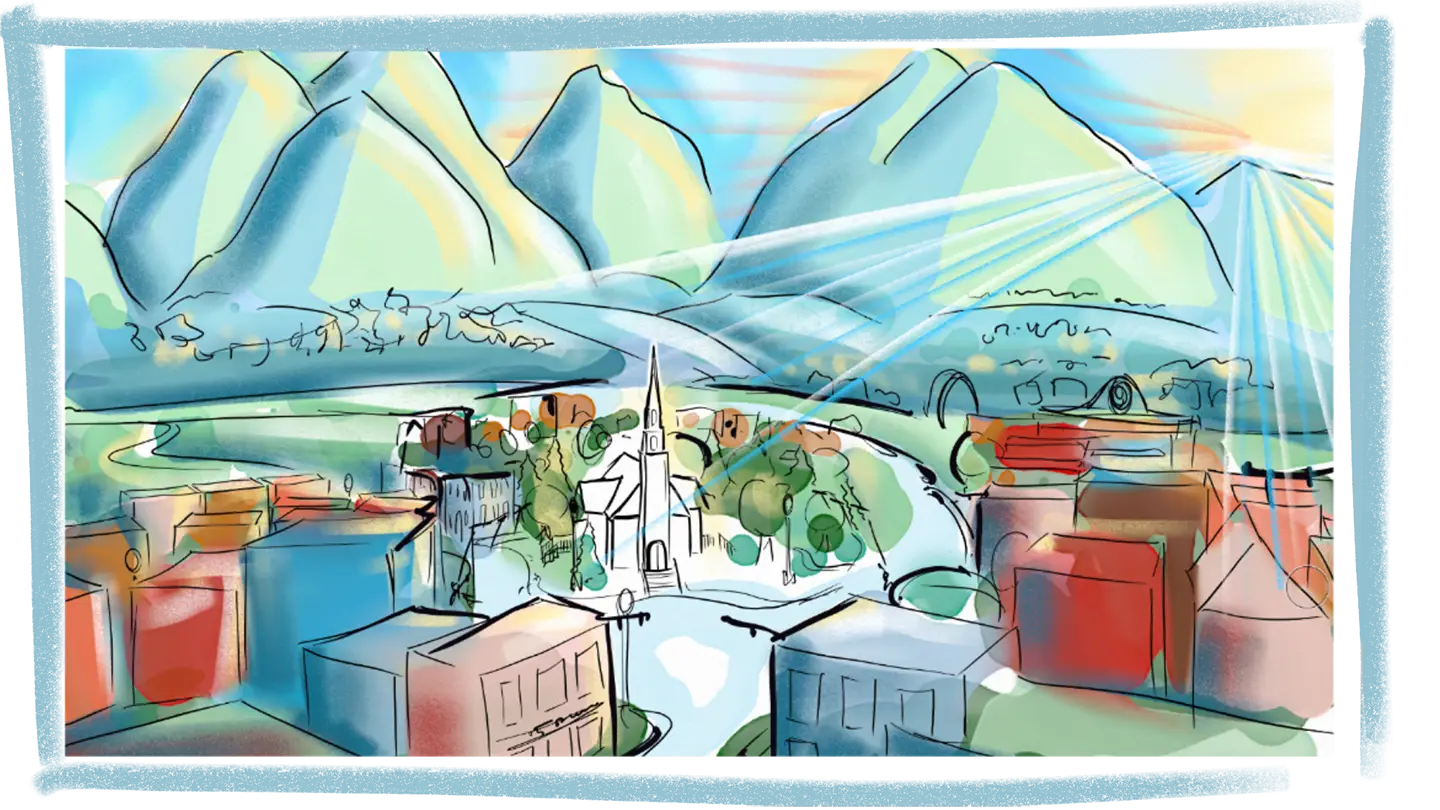
Just think of Villeneuve, Belle’s friendly, idyllic village in Beauty and the Beast. It's a place where I’d love to hang out – and that connection makes the treachery of the town feel that much more personal. Tolkien’s Shire is another example of the power of place in a story. For the Hobbits, and for me(!), the idea of them not being able to return to their homeland brings almost as much tension as them risking death for the cause.
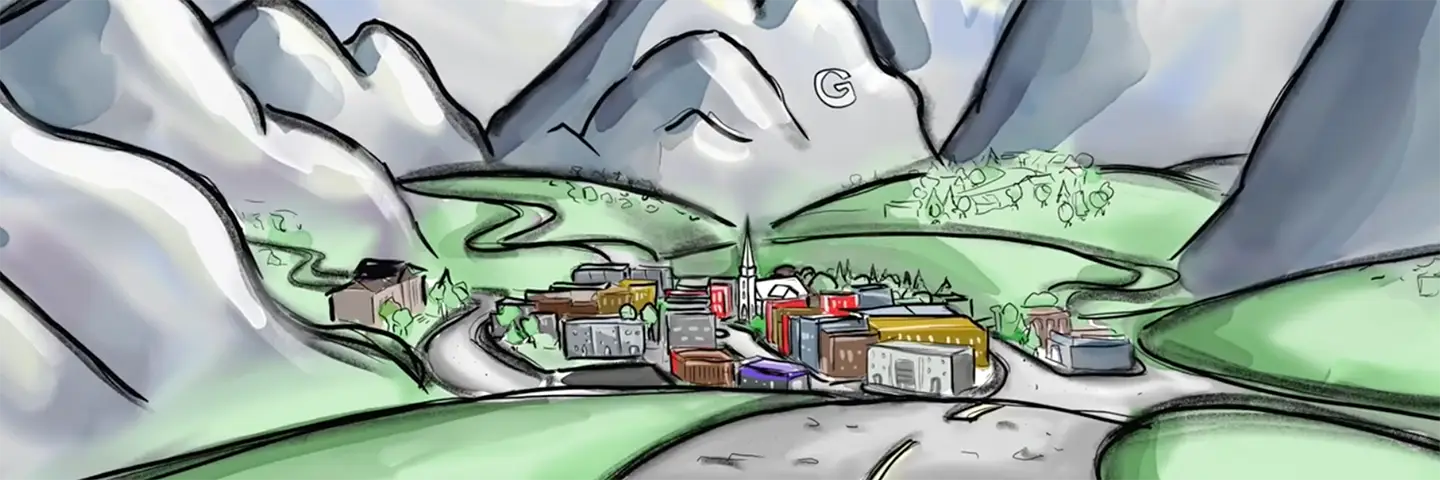
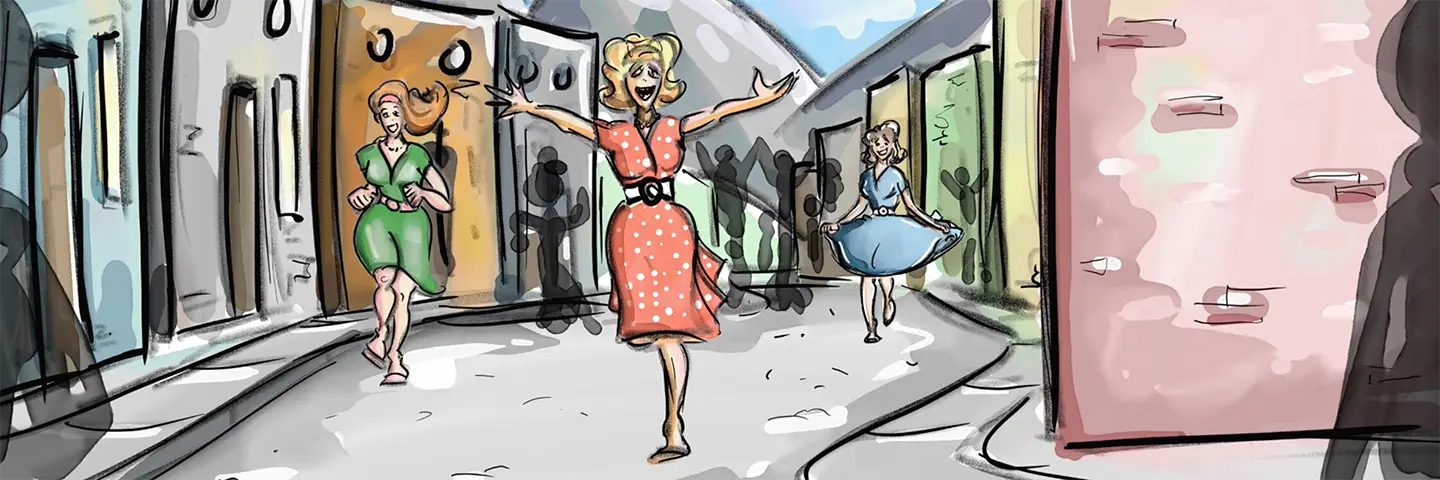
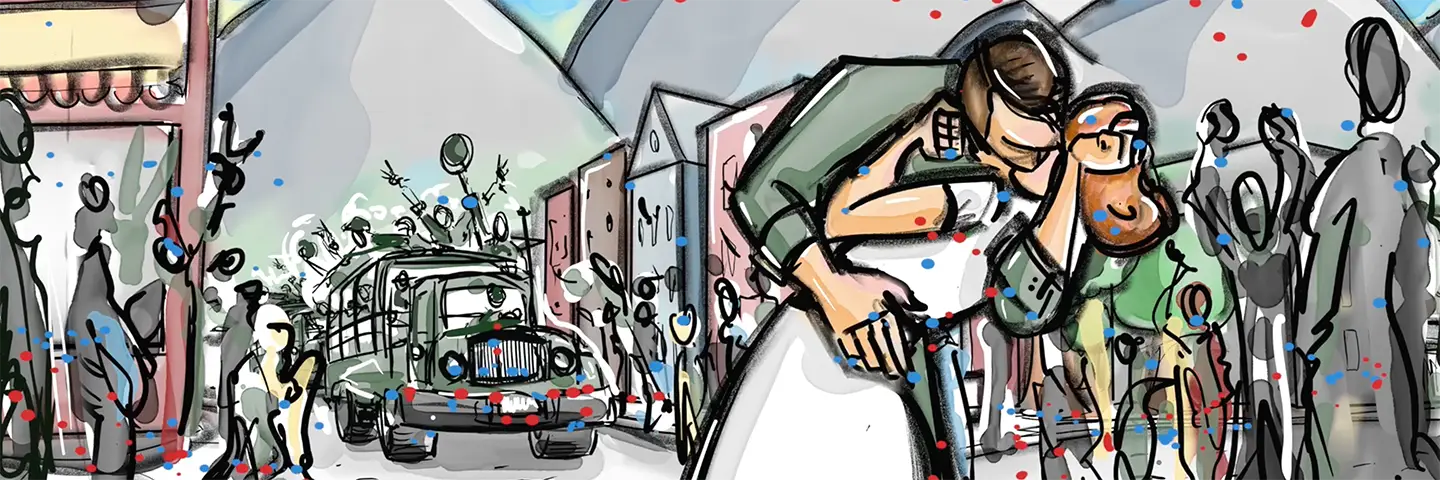
Pleasant Grove is a real place, we all grew up in or around the small town. Bryan even rented a room from Marcella (the mother in our story) in her old age! (that’s how we learned of the whole story). This realness is inextricably connected to our experience, and to this story. Nevertheless, like Belle's Villeneuve, or Tolkien’s Shire, the Pleasant Grove in our story needed to be more than reality. It's a place the audience needs to fall in love with – because every loss and redemption and moment of grace that happens there, lands harder when you feel like you know the place where it happened.
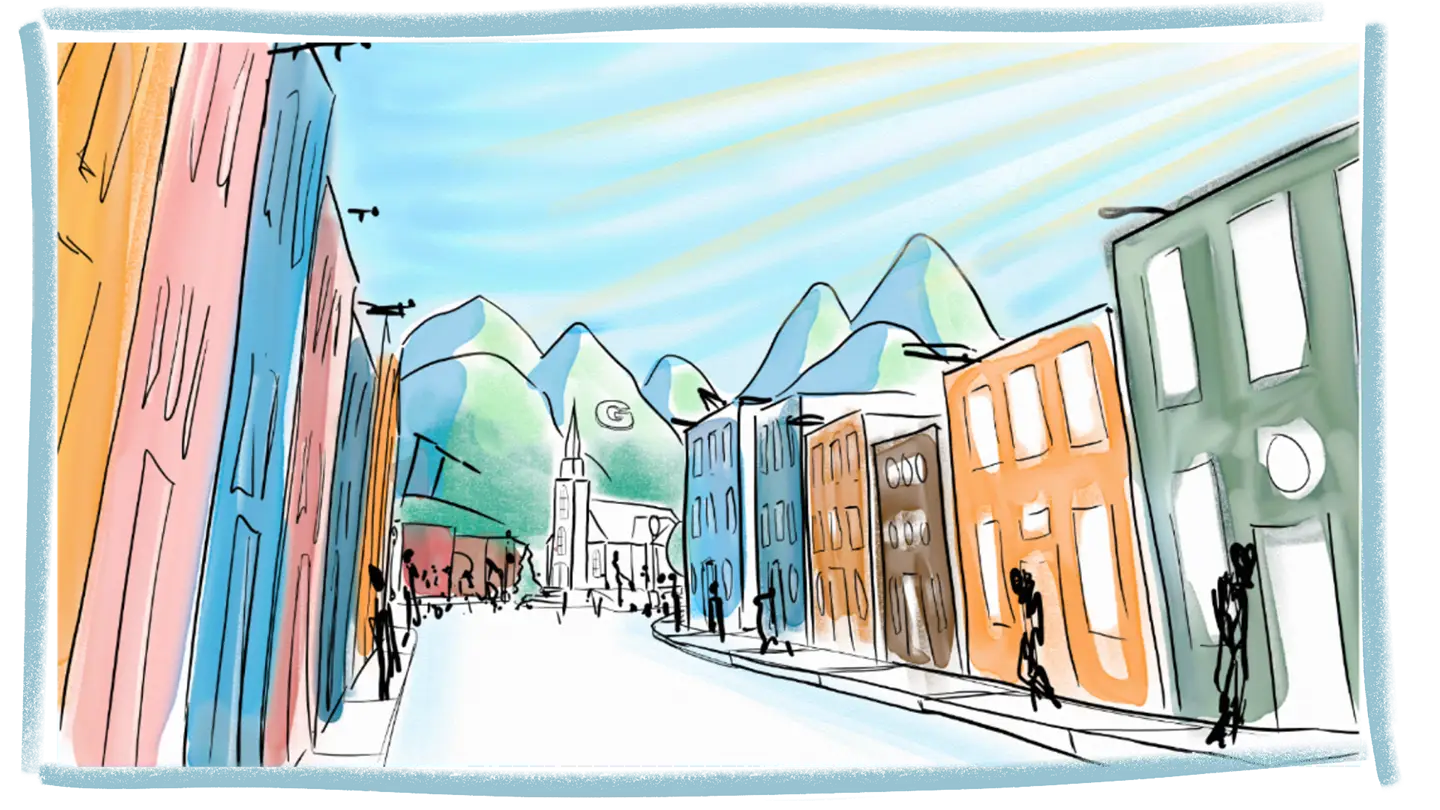
This is perhaps the most important reason we take the setting(s) so seriously: These places are their own characters. They go through changes too. When Hogwarts falls, for example, and Dumbledore dies, and the Dementors come and suck the life out of everything good... you feel it. You mourn Hogwarts as much as you feel Harry Potter’s pain.
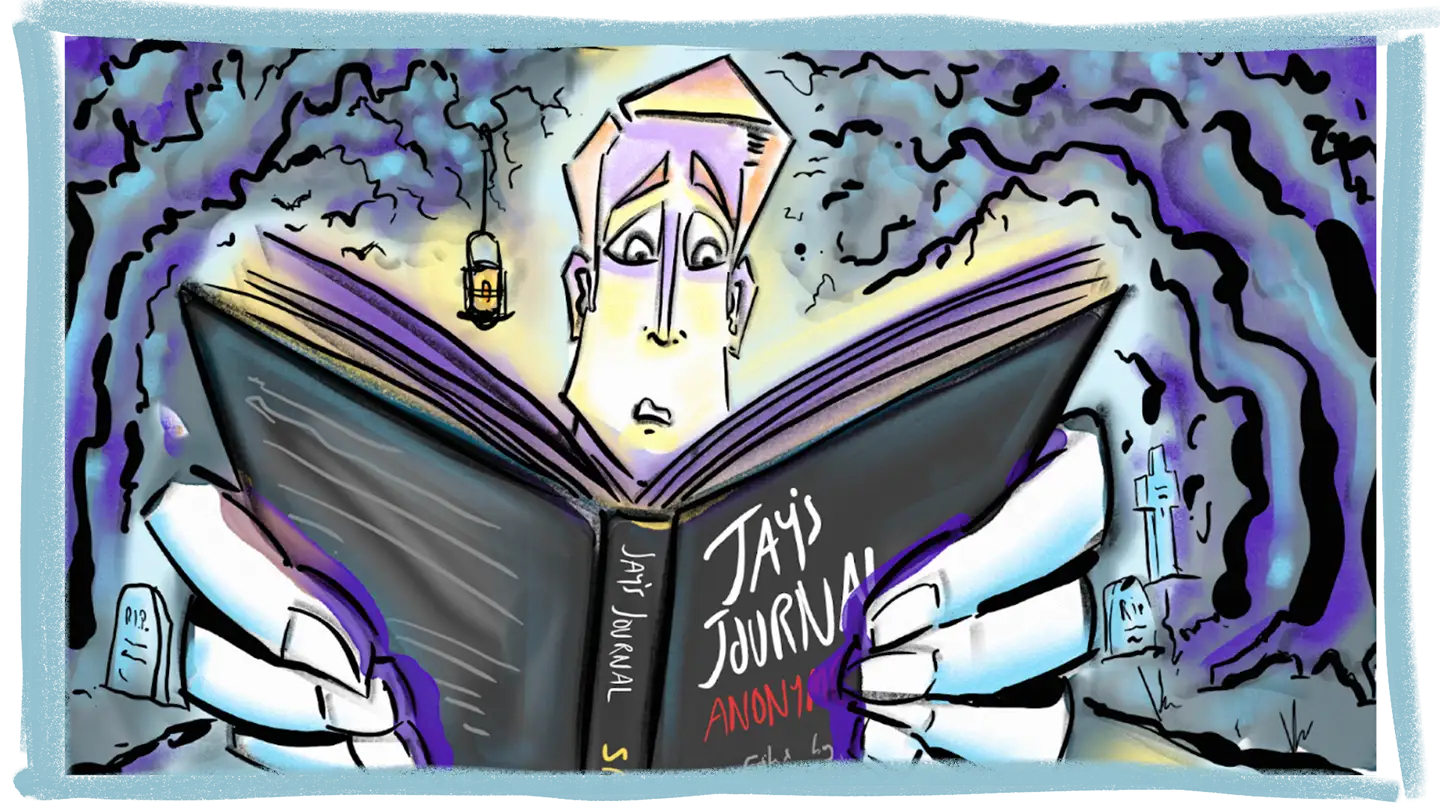
And when our beloved town of Pleasant Grove is taken over by the neo-con fascists and the demons they’ve unwittingly submitted themselves to, we feel that as well. It’s not just the people who are hurting anymore. It’s the town itself.
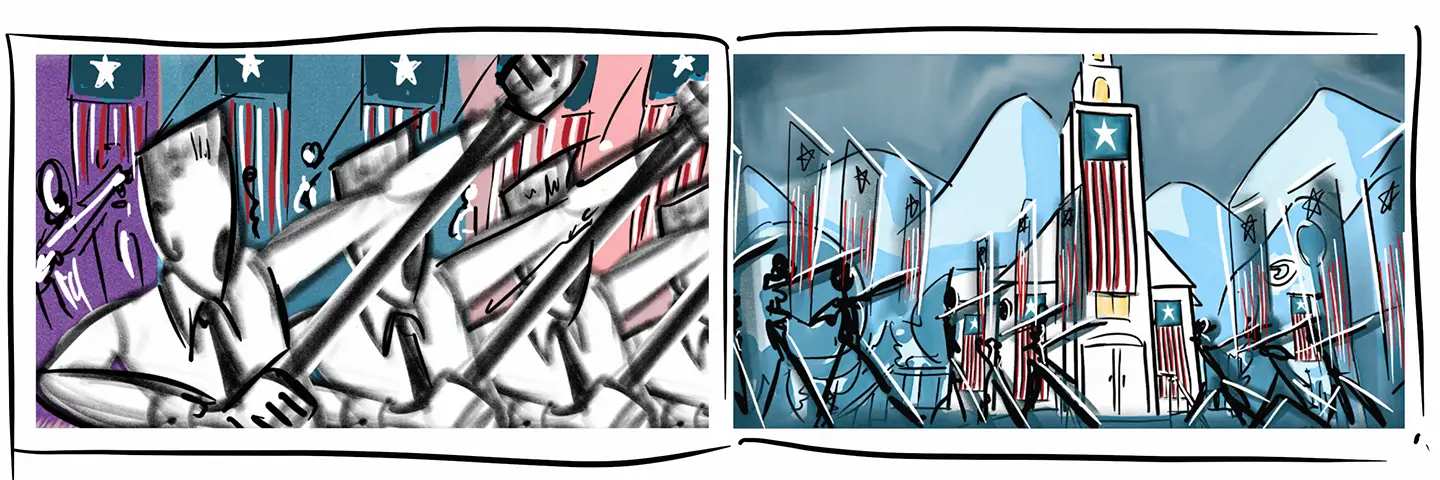
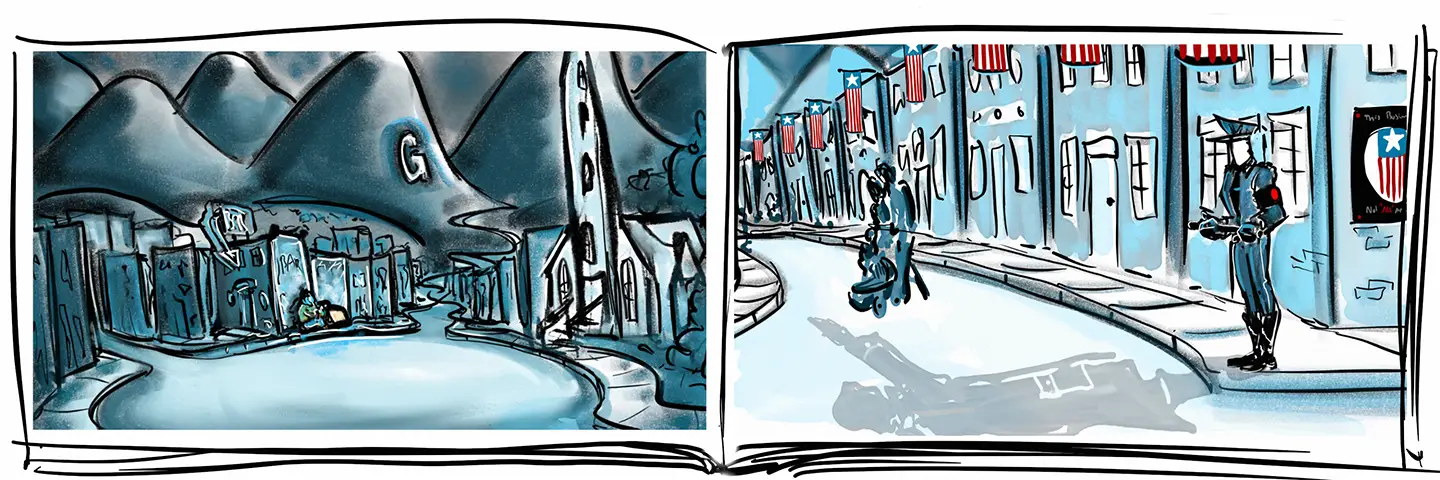
In the end, the town needs just as much redemption and cleansing as the people themselves. It’s not just the “bad guys” that have to be destroyed (as is needed in any good hero’s journey). No, the entire “darkness” and “funk” that has overtaken the town needs to be destroyed.
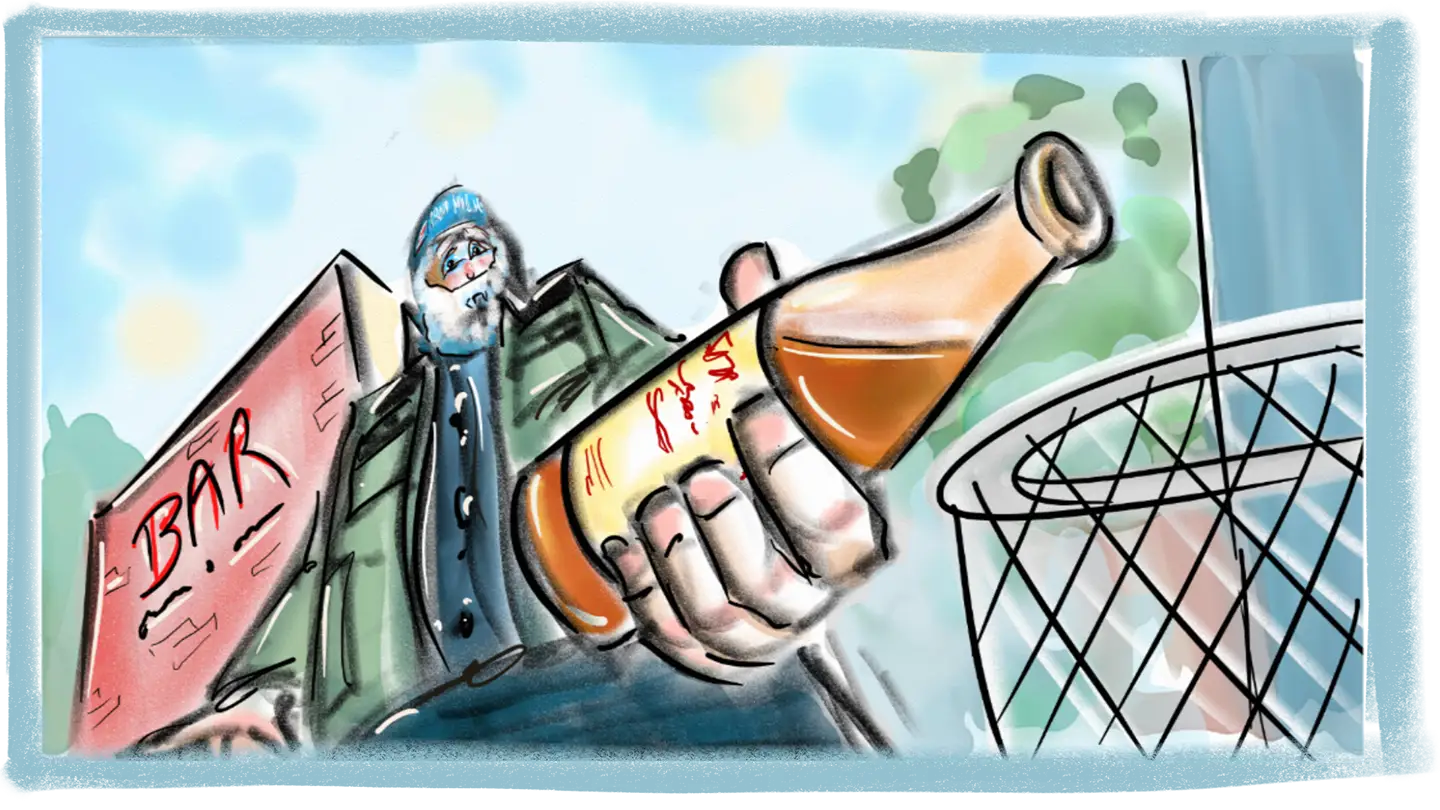
But, as it is with any town, it’s only as beautiful as the people who live there. In this way Pleasant Grove, and its journey into hell and back, kind of serves as a metaphor for us all. Our communities and countries are only as beautiful (or redeemed) as the people within them; and that’s especially true when those on the fringes are also redeemed.
STYLE "IS" STORY
The style, or visual vibe of Pleasant Grove is something that has been developing almost from the beginning. At this point, it feels inseparable from the story, lyrics, music, characters and the place. Music makes you feel something, lyrics help you communicate it, but what that looks like can change everything. Imagine Into the Spider Verse animated in a classical Disney style, or Pixar’s Toy Story style...how would that work?
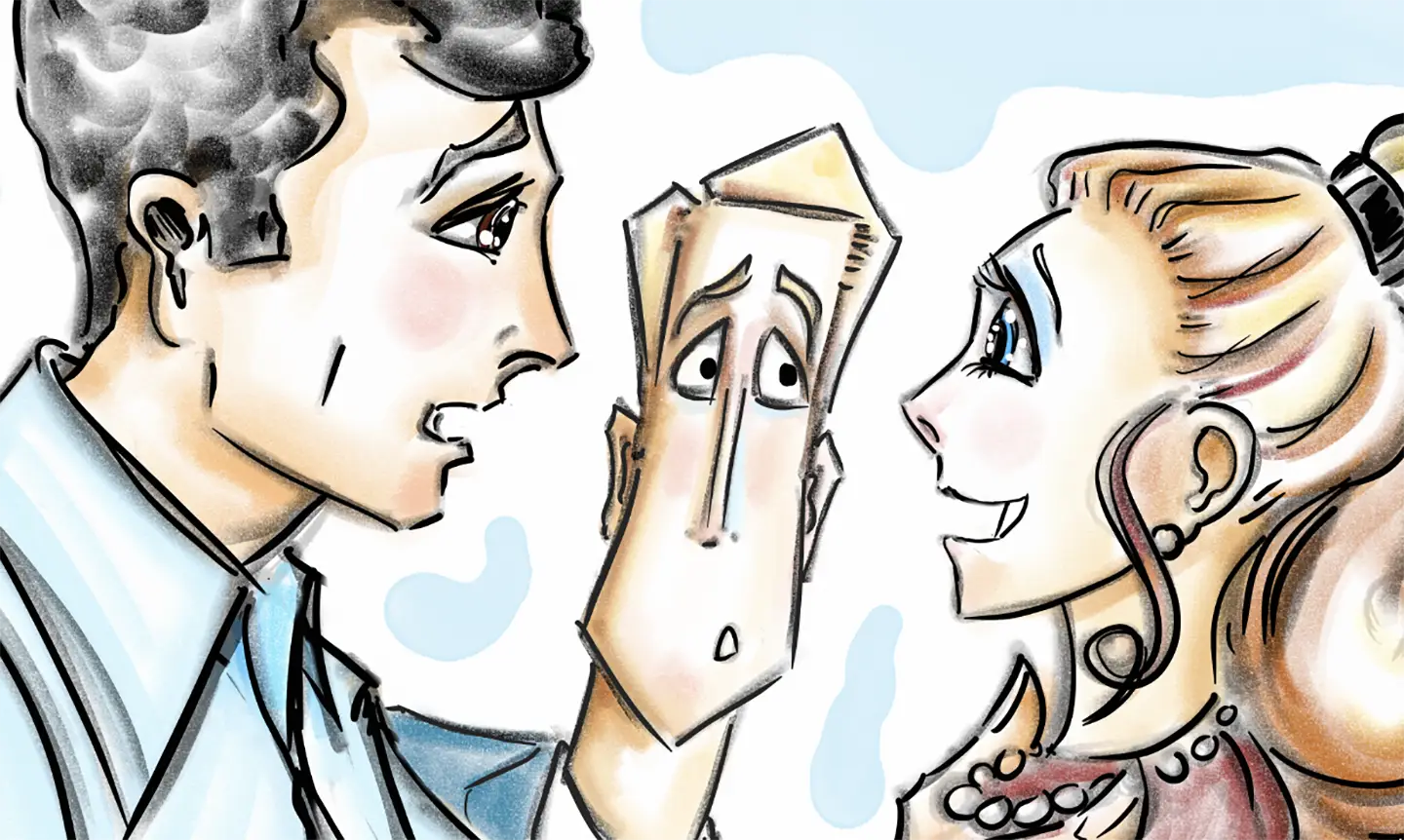
Our style started with Bryan’s sketches, mostly. He is undeniably the original pen-to-paper force in the art department. My approach is much more structural or technical in nature. Kind of like a methodical architect working with a zanny interior designer! Regardless, the visual identity of Pleasant Grove has developed the same way everything else did: both collaboratively and obsessively, along with the story, the music, and the characters
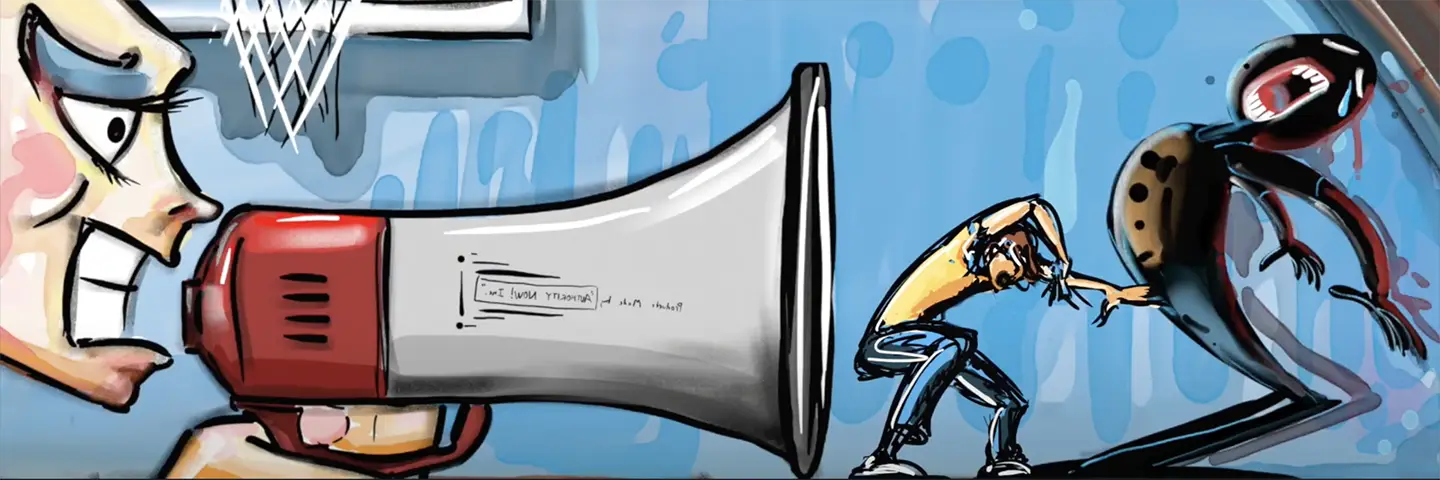
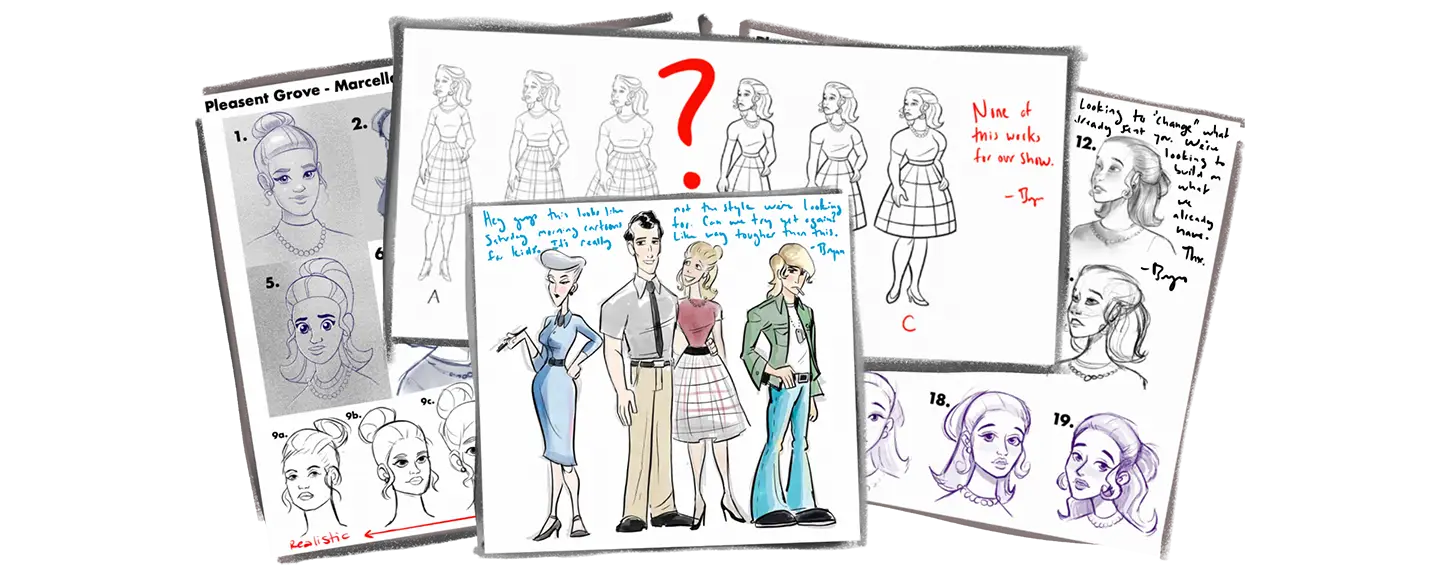
Over the years we tried using outside artists. We even even hired a talented animation company for a period of time. But it just didn’t work. We found out quickly that a visual style this internal is almost impossible to hand off. You can describe it, show references and give endless feedback when it’s still not working (see Bryan’s constant markup notes!). But what had developed organically – alongside the entire creative process – had become part of the DNA. It couldn't be mimicked from the outside.
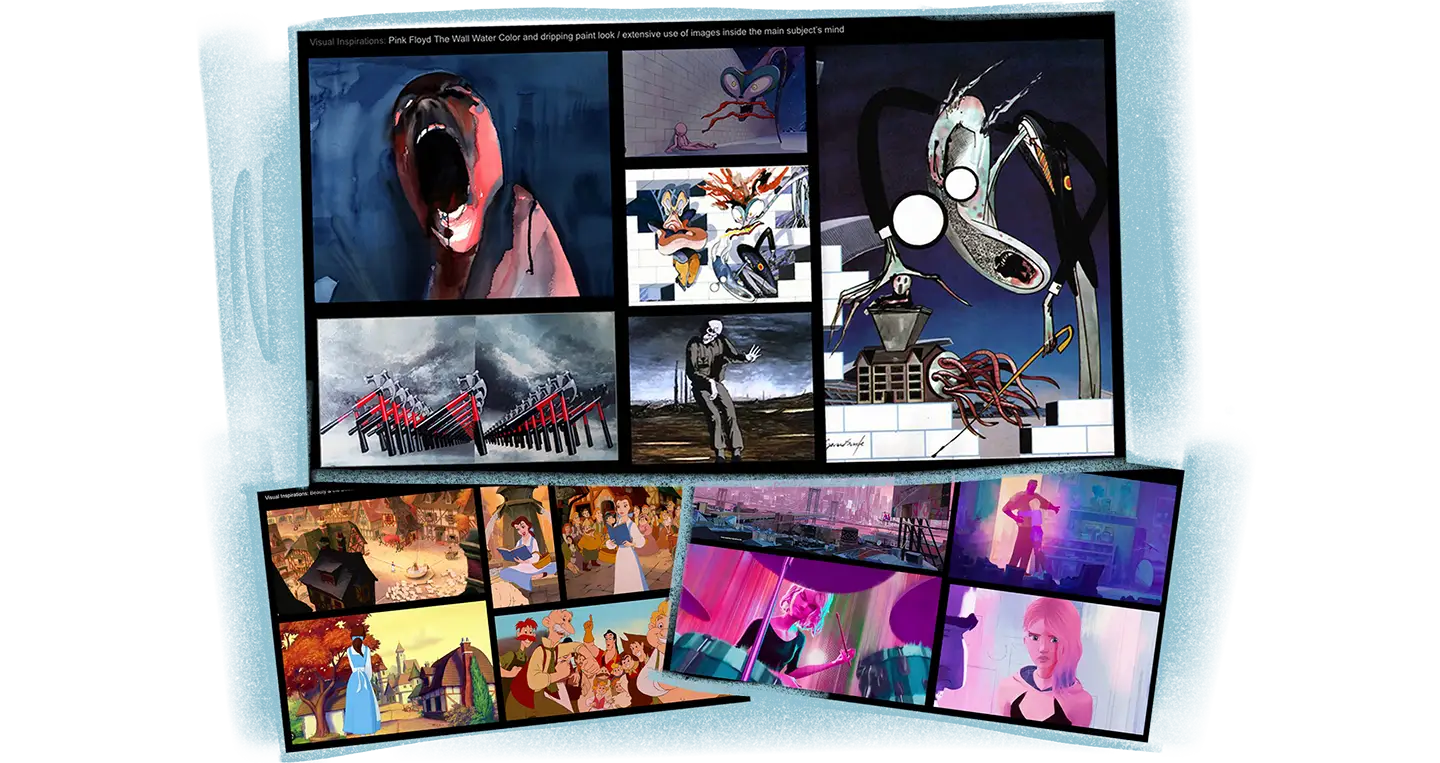
What we landed on is blatantly influenced by the style of Pink Floyd's The Wall, but with something of Beauty and the Beast woven through it as well. But we also love the hand painted portions of Into the Spiderverse too! The best way to describe it: Loose. Intentionally sloppy. Conspicuously chaotic at times. These artistic styles resonated with us because...
And that’s nothing against the amazing work they do at PIXAR. But real life is just different. Ans so are we. We are all outside the lines. We are all, to some degree, messy and broken – something Pleasant Grove helps us understand and celebrate. That, as much as anything, is a central message of the show.
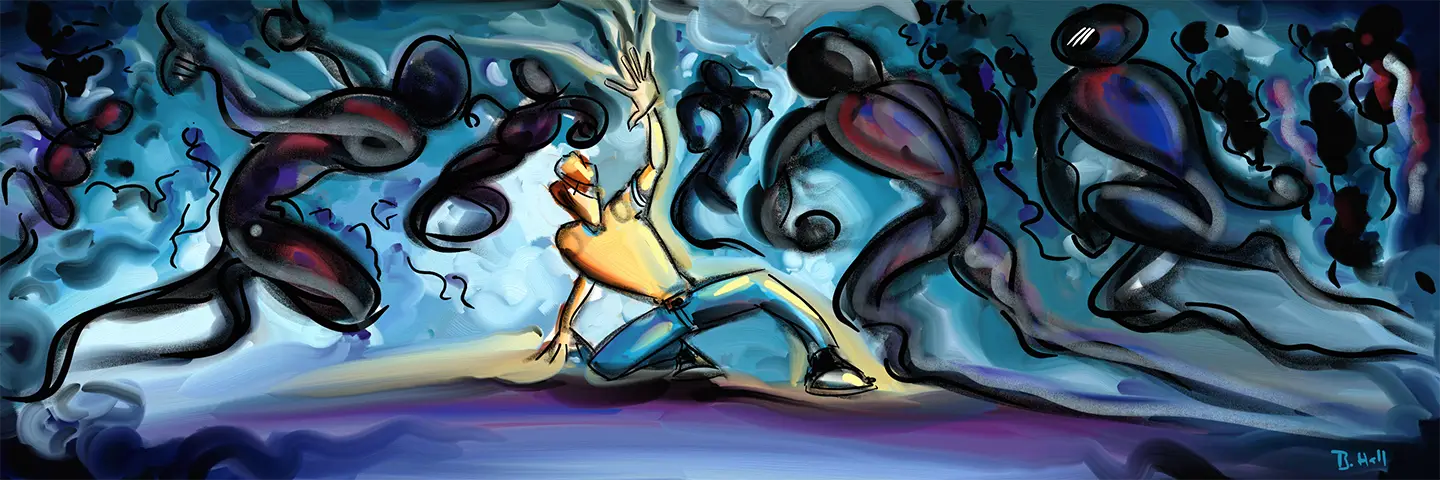
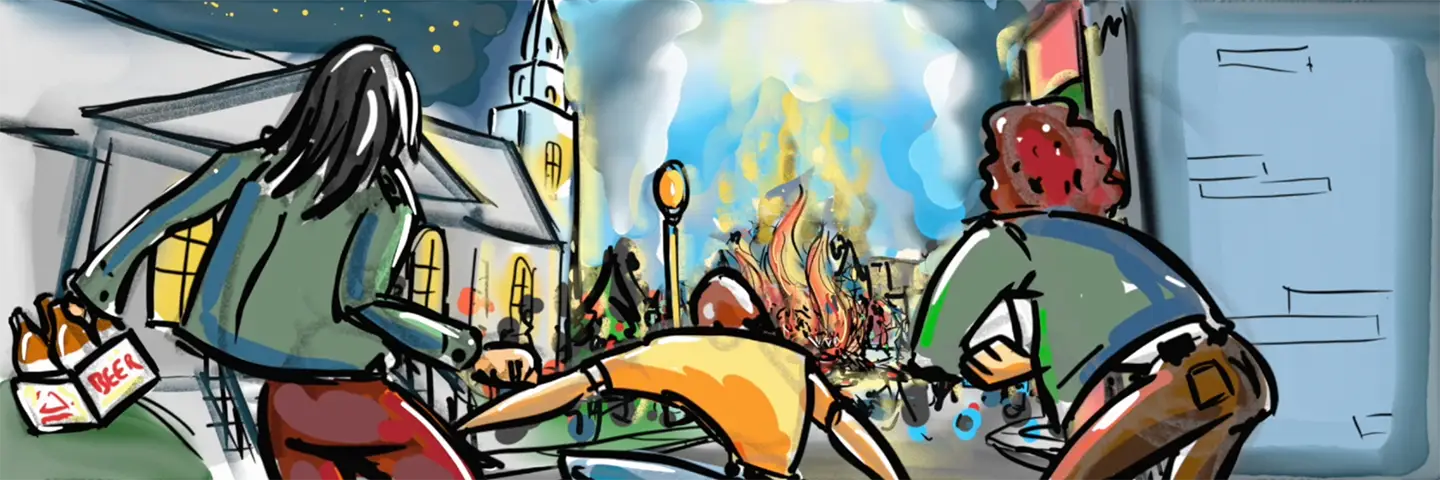
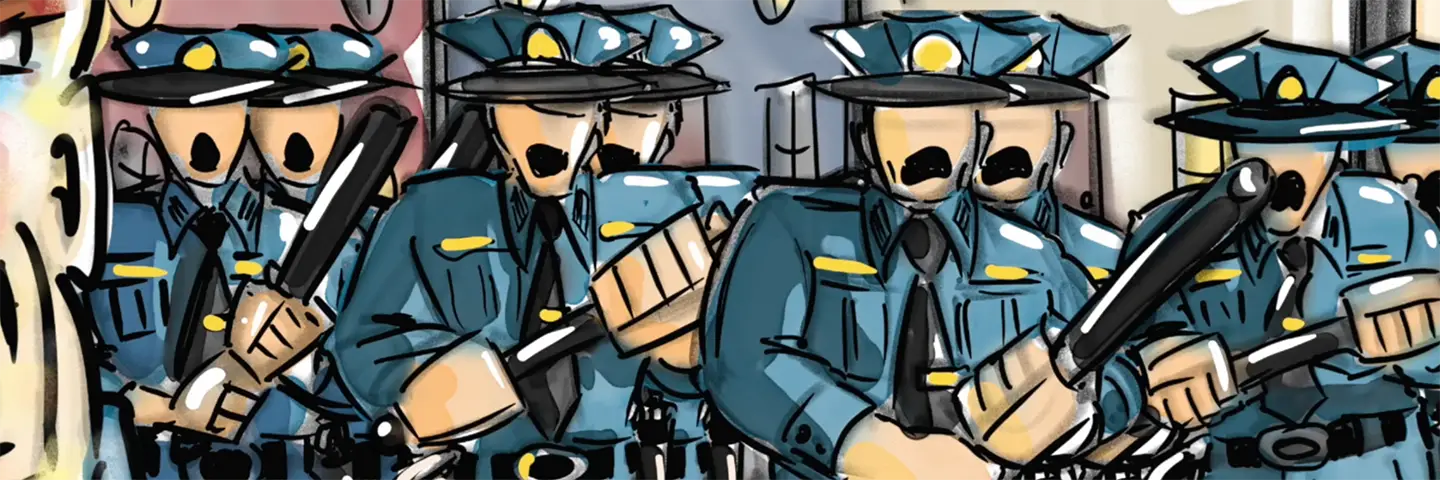
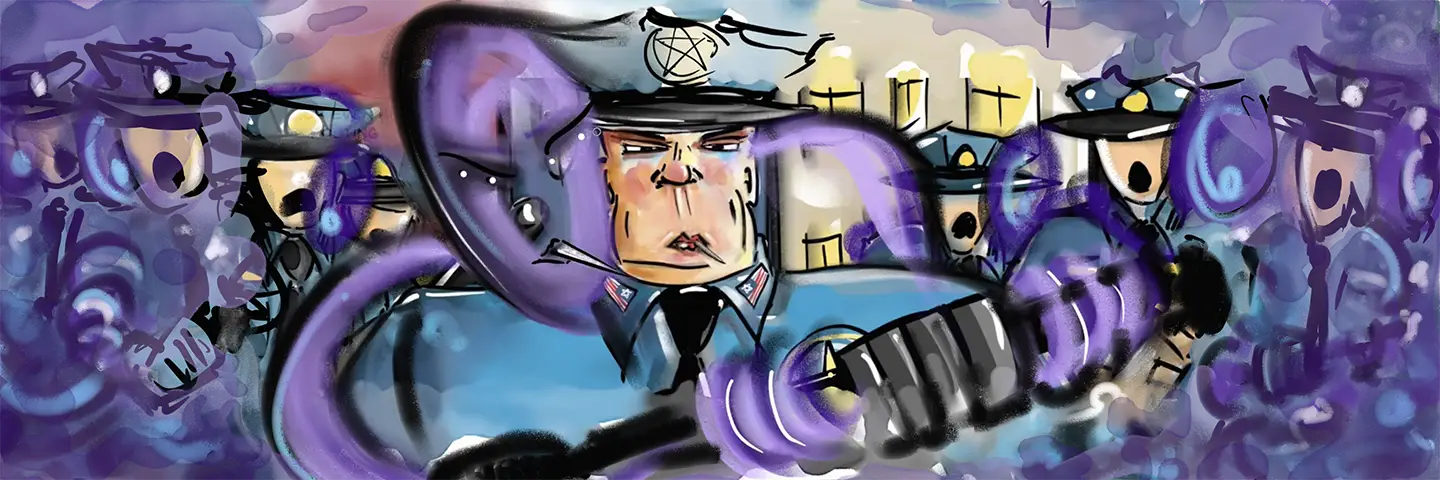
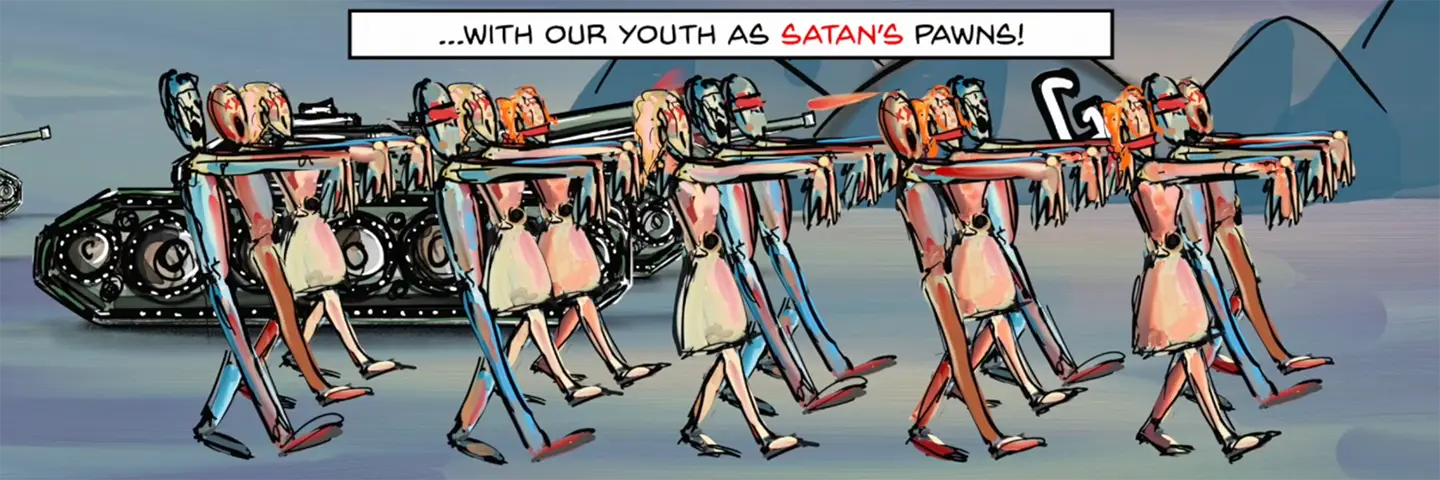
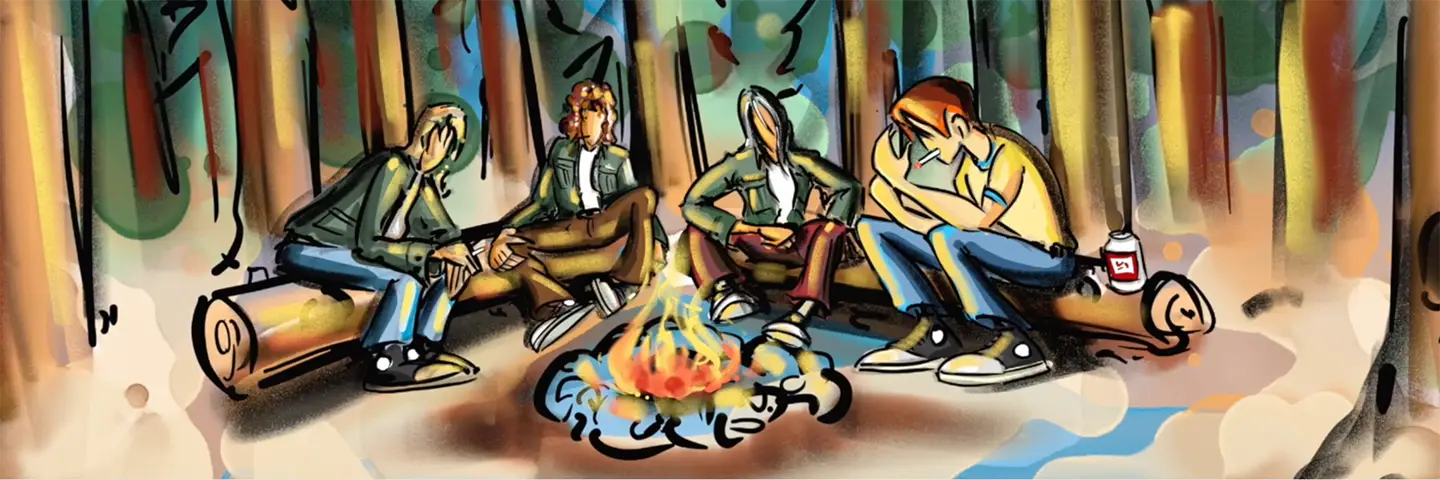
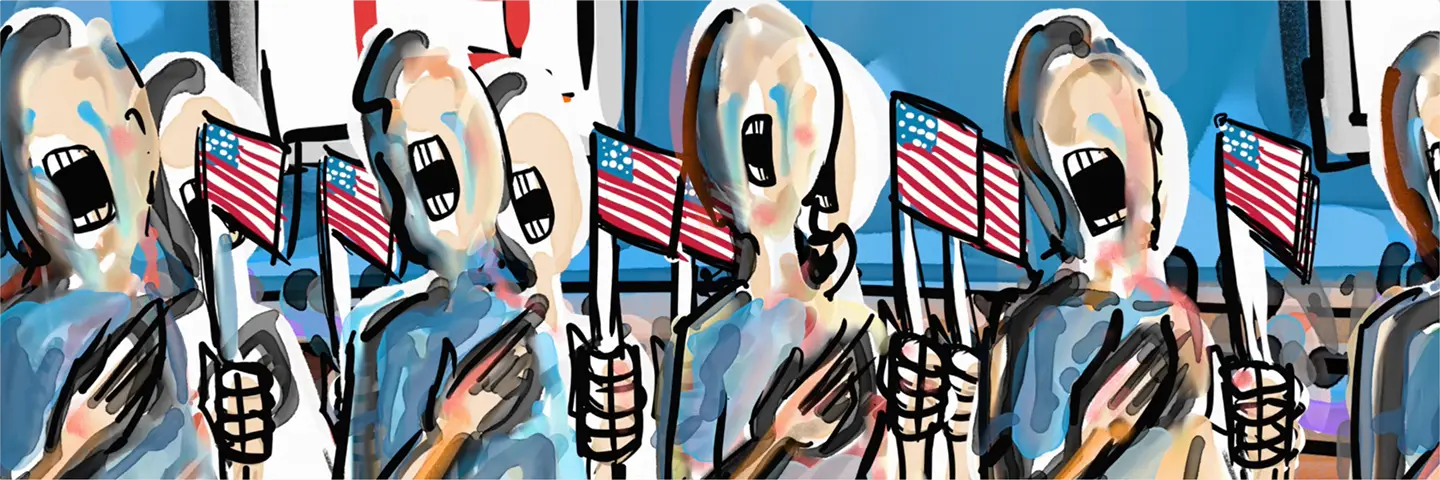
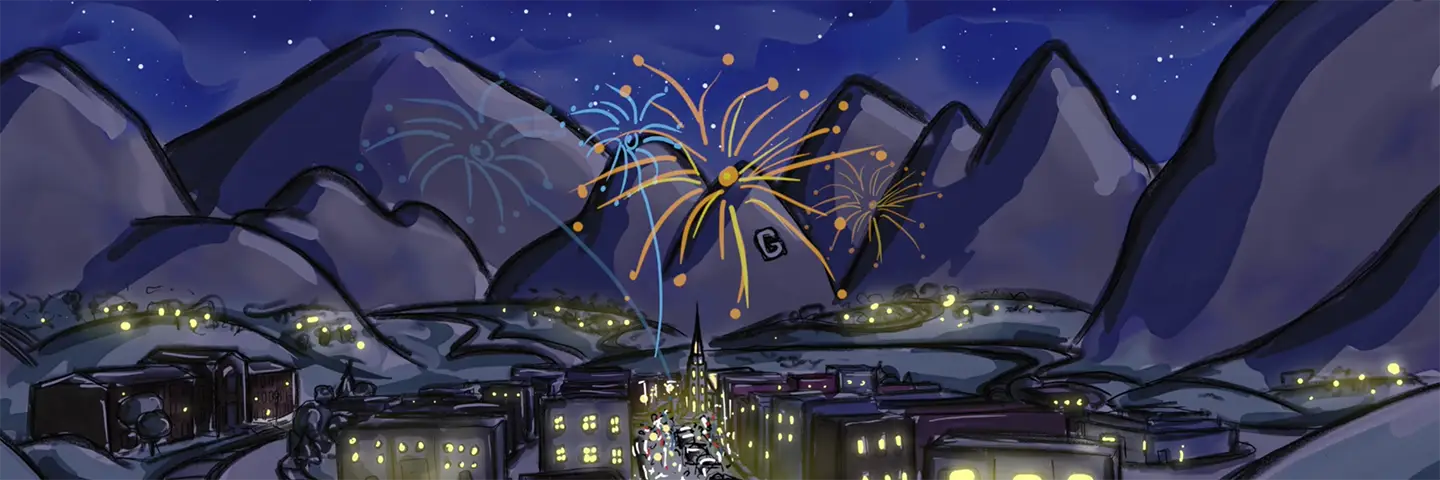
In the end, we have painstakingly hand picked a small team of world class artists that can both match our original style and help us improve upon it. To learn more about them and where the show is now (in development) you can see how this is all coming together today on our STUDIO B.O.P. page.